9 Best Vacuum Sealers for Liquids (October 2026)
The best vacuum sealers for soups, sauces, and liquid-rich foods include the FoodSaver V4400 2-in-1 Vacuum Sealer Machine for everyday storage with moisture detection, the FoodSaver FM2100 Vacuum Sealer Machine for moist foods and custom bags, and the Nesco Deluxe Food VS-12 Vacuum Sealer for gentle sealing of moist foods.
On this page (5 sections)
The best vacuum sealer for liquids is a chamber model, because it removes air from the chamber around the bag instead of pulling air and liquid through the bag opening. The Avid Armor USV20 is a focused home option, while Gasbye and Beelicious add larger chamber formats.
For small amounts of moisture, some external machines offer moist or liquid modes, pulse control, and removable drip trays. Compare the best Weston vacuum sealers for more options.
They can suit marinated meat or damp vegetables, but a bag of soup or sauce is a different job.
Our picks compare chamber capacity, liquid handling, controls, and useful cleanup features. We checked the product details for how each machine is meant to handle wet foods, then matched those features to typical home portions.
Our picks at a glance
-
1
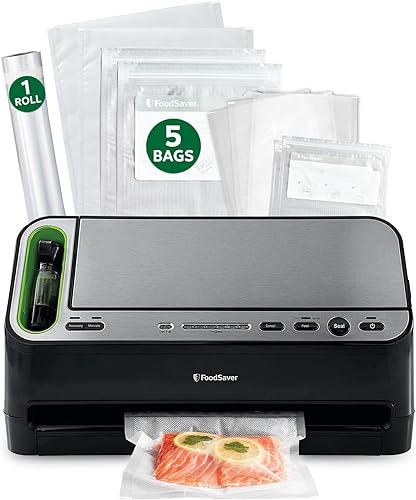 Best for everyday storage with moisture detection
FoodSaver V4400 2-in-1 Vacuum Sealer Machine
9.7/10 our score
See it on Amazon -
2
 Best for moist foods and custom bags
FoodSaver FM2100 Vacuum Sealer Machine
9.6/10 our score
See it on Amazon -
3
 Best for gentle sealing of moist foods
Nesco Deluxe Food VS-12 Vacuum Sealer
9.5/10 our score
See it on Amazon
- 4
 Check it
Avid Armor USV20 Chamber Vacuum Sealer Machine
Best for frequent soups and sauces - 5
 Check it
MEGAWISE Updated Vacuum Sealer Machine
Best for small amounts of moisture - 6
 Best for liquid mode on an external sealerCheck it
- 7
 Best for everyday chamber batchesCheck it
- 8
 Check it
Beelicious Pro DualCore CVS101 6.5QT Chamber Vacuum
Best for chamber and external sealing - 9
 Check it
INKBIRD Pro Vacuum Sealer Machine INK-VS04
Best for liquid mode and adjustable suction
Which vacuum sealer is best for liquids?
The Avid Armor USV20 is the best fit for regular soup, sauce, and marinade sealing in home-size portions. See the Avid Armor USVX chamber sealer review for another model from the brand.
Its chamber design keeps liquid from being drawn toward a suction port, and its adjustable vacuum time gives you room to adapt the cycle.
FoodSaver V4400 2-in-1 Vacuum Sealer Machine: Best for everyday storage with moisture detection
- Automatic moisture detection
- Removable drip tray
- Built-in roll storage and cutter
- Handheld and standard sealing
Moisture detection switches to the correct mode, and the removable drip tray catches overflow. It suits everyday sealing where foods may be damp, though it is not a chamber model for pooling liquids.
Pros
- Automatic moisture detection
- Removable drip tray
- Built-in roll storage and cutter
Cons
- External suction sealing is less suited to free-flowing liquids
- Choose a chamber model for regular soup or sauce portions
FoodSaver's V4400 suits routine kitchen storage when damp ingredients are part of the mix. Its automatic moisture detection switches to the appropriate mode, and the removable drip tray catches overflow for easier cleanup.
The machine also has built-in roll storage and a cutter for custom bag sizes. Its handheld sealer works with compatible zipper bags and containers, which can be handy when you want to store food without making a new vacuum bag.
Treat it as an everyday external sealer, not a substitute for a chamber when you want to seal a pouch containing free-flowing broth. Keep liquid below the bag opening and wipe the sealing area dry before closing.
Choose the V4400 if your usual job is leftovers, produce, or moist foods and you value the tray and automatic moisture handling. For frequent liquid portions, move up to a chamber model.
FoodSaver FM2100 Vacuum Sealer Machine: Best for moist foods and custom bags
- Dry and moist food modes
- Dual heat sealing strips
- Built-in roll cutter
- Accessory hose
The moist setting and dual heat strips fit damp foods and marinated ingredients. For free-flowing soup, use a chamber sealer or freeze the liquid first.
Pros
- Moist food mode
- Dual heat sealing strips
- Custom-size bags from a roll
Cons
- Not designed to remove air from a chamber around liquid-filled bags
- Use extra care with pourable foods
The FM2100 is a simpler FoodSaver option for people who seal a mix of dry and moist foods. Its moist setting and dual heat strips suit damp ingredients, while the built-in cutter lets you make bags sized to the portion.
An accessory hose is included for compatible FoodSaver accessories. The machine also comes with a roll and pre-cut bags, so you can begin with several portion sizes before choosing a preferred roll length.
Like other external suction machines, it draws air through the bag opening. Use it for damp foods rather than a filled bag of soup, or freeze a liquid portion first so it won't travel toward the seal.
This pick makes sense when moist foods are common but free liquid is occasional. If you seal sauces every week, a chamber model reduces the need to work around the liquid.
Nesco Deluxe Food VS-12 Vacuum Sealer: Best for gentle sealing of moist foods
- Dry, moist, and double seal modes
- Normal and gentle vacuum pressure
- Viewing window
- Two bag rolls included
The moist setting and gentle vacuum option offer control for marinated meats and other damp foods. For soups and sauces, a chamber sealer avoids pulling liquid toward the pump.
Pros
- Gentle vacuum option
- Double seal mode
- Viewing window
Cons
- External suction can draw free liquid toward the seal
- Not a chamber sealer
The NESCO VS-12 suits buyers who want more control while sealing tender or damp foods. Its moist mode, gentle vacuum option, and double seal mode let you choose settings based on the contents.
The viewing window helps with bag placement, and the easy-lock handle supports one-handed operation. Two rolls are included, with widths of 8.6 and 11.8 inches, so you can make different size bags.
Use the gentle vacuum setting for foods that could be crushed and keep marinades below the opening. For a pourable liquid portion, freeze it first or use a chamber sealer that does not pull liquid through the bag opening.
Pick the VS-12 for varied home sealing where pressure control matters. It's a practical external option for damp foods, but it isn't the strongest fit for regular soup batches.
Avid Armor USV20 Chamber Vacuum Sealer Machine: Best for frequent soups and sauces
- 4 L chamber
- Adjustable vacuum time from 15 to 60 seconds
- 11.5 in heating bar
- Works with smooth pouches
Avid Armor says its full-chamber pressure technology seals soups, stews, marinades, and meat juices without pulling liquid from the bag. Adjustable vacuum time gives you control over the cycle.
Pros
- Designed for liquid-rich foods
- Adjustable vacuum and seal controls
- User-replaceable seal bar
Cons
- Chamber size limits bag and portion dimensions
- Larger and heavier than a compact external sealer
Avid Armor's USV20 is the clearest match here for frequent liquid-rich foods. Its 4 L chamber handles soups, stews, marinades, and meat juices, while the adjustable vacuum time ranges from 15 to 60 seconds.
The 11.5 in heating bar gives room for pouches up to 11 x 10 inches, within the machine's chamber dimensions. Avid Armor also describes the seal bar as user-replaceable, which may matter if you expect to seal often.
Chamber sealing works differently from an external unit: the machine removes air from the chamber, so liquid isn't pulled through the bag opening during evacuation. The bag and portion still need to fit, and leave enough space at the top to make a clean seal.
Choose the USV20 for regular home batches and sous vide prep. Compare the best sous vide chamber vacuum sealer if your main use includes portioning ingredients for low-temperature cooking.
MEGAWISE Updated Vacuum Sealer Machine: Best for small amounts of moisture
- Dry and moist modes
- Pulse vacuum control
- Moist mode handles up to 10 ml of liquid
- Compact body
MEGAWISE describes its moist mode as handling up to 10 ml of liquid, while pulse mode lets you stop vacuuming as needed. This is for small amounts of moisture, not bags filled with soup.
Pros
- Pulse mode gives manual control
- Moist mode has a stated liquid limit
- Compact design
Cons
- Not suitable for free-flowing liquid portions
- The 10 ml limit calls for careful portioning
MEGAWISE is a compact external sealer for users who mostly seal solid foods with occasional moisture. Its moist mode is described for up to 10 ml of liquid, and pulse control gives you a chance to stop vacuuming before juice reaches the seal.
The unit includes a hose for compatible storage jars and wine bottles. Its small size makes it easier to store than a chamber model when counter space is limited.
The stated liquid amount is small, so don't treat this as a soup sealer. For marinated meat, use pulse mode and watch the bag opening; for a bowl of sauce, freeze it first or use a chamber.
Choose this model when compact storage and manual control matter more than sealing pourable foods. If liquids are a regular task, spend the space on a chamber machine.
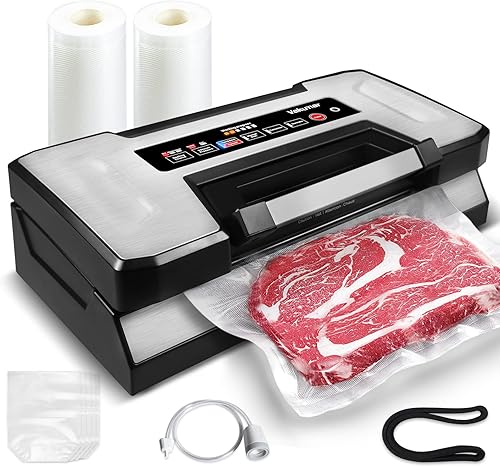
Vakumar Vacuum Sealer Machine: Best for liquid mode on an external sealer
- Dry, moist, and liquid modes
- Double heat seal
- Removable drip tray
- Pulse mode
Vakumar includes a dedicated liquid mode and says it is for soups, stews, and purees. Its removable drip tray helps catch spills, but portion and bag handling still matter with an external sealer.
Pros
- Dedicated liquid mode
- Double heat seal
- Removable drip tray
Cons
- Still uses external bag suction
- Chamber models are a simpler choice for frequent pourable foods
Vakumar stands out among external sealers because it has a dedicated liquid mode alongside dry and moist modes. The maker describes the mode for soups, stews, and purees, and the removable drip tray is intended to catch spills.
It also offers pulse mode, which lets you stop vacuuming based on what you see in the bag. That control can help with marinated foods, but it still requires care around the bag opening and seal area.
The package includes two rolls, a hose adaptor, an extra lower gasket, and multifunction vacuum bags. Keep liquid portions small and follow the operating instructions, especially when using the liquid setting.
This is a reasonable option if you want an external machine with more wet-food controls. For repeat batches of pourable food, compare it with the chamber models below.
Gasbye Chamber Vacuum Sealer: Best for everyday chamber batches
- 5.3 qt chamber
- 11.5 in replaceable double sealing bar
- 30 pre-cut bags included
- External air suction hose
The chamber removes air around the bag, which Gasbye says helps keep soups, sauces, and marinades from being drawn out during sealing. Its stated chamber and bag dimensions help you check whether your portions fit.
Pros
- Made for liquid and solid foods
- Replaceable double sealing bar
- Pre-cut bags included
Cons
- Requires counter space for a chamber unit
- Bag size is limited by the chamber
Gasbye's CV4520 offers a 5.3 qt chamber and an 11.5 in double sealing bar, making it a useful choice for everyday chamber batches. Gasbye says its chamber pressure approach helps seal soups, sauces, marinades, and chunky foods without drawing liquid from the bag.
The machine includes 30 pre-cut 11 x 11 in bags, an external suction hose, and a filler plate. Check the chamber's 9.7 in width against the bags and portions you plan to use.
Gasbye says the sealing bar is replaceable, with dual heating wires. The chamber design also suits sous vide portions, where you may want to seal meat with marinade.
Choose this model if the USV20's chamber dimensions seem restrictive for your meal prep. For more on liquid handling, read Can a Chamber Vacuum Sealer Seal Liquids?.
Beelicious Pro DualCore CVS101 6.5QT Chamber Vacuum: Best for chamber and external sealing
- 6 L upper chamber
- Independent lower external sealing area
- Smooth and textured bag support
- Adjustable vacuum and seal times
The upper chamber is intended for liquids, soups, and powders, while the separate lower area handles bags too large for the chamber. Check each bag and portion against the chamber dimensions.
Pros
- Two sealing areas
- Smooth and textured bag support in the chamber
- Adjustable vacuum and seal times
Cons
- Large, heavier countertop machine
- The upper chamber still sets a limit on portion size
Beelicious Pro offers two sealing areas: an upper chamber for liquids, soups, and powders, and an independent lower area for bags that cannot fit inside the chamber. That split can help when your meal prep includes both liquid pouches and larger dry-food bags.
The upper chamber is about 6 L and supports smooth chamber bags as well as textured or embossed rolls that fit inside. The machine also has adjustable vacuum and seal times, plus an external port for compatible jars and containers.
At 25.7 lb, it is a substantial counter appliance. Measure your available space and the largest container or bag you expect to seal before choosing it.
This is the most flexible chamber pick here if you value both chamber and external sealing. For ideas on using a chamber machine for cooking prep, see Anova chamber vacuum sealer recipes.
INKBIRD Pro Vacuum Sealer Machine INK-VS04: Best for liquid mode and adjustable suction
- Liquid, moist, and dry modes
- Gentle and normal suction
- Removable 10 oz drip tray
- Adjustable sealing time
INKBIRD offers a liquid mode, adjustable suction, and a drip tray that holds up to 10 oz. Those controls help with liquid-rich sealing, though a chamber model is a better fit for frequent free-flowing portions.
Pros
- Liquid mode
- Gentle suction option
- Large removable drip tray
Cons
- External suction can draw liquid toward the bag opening
- Not a chamber sealer
INKBIRD combines liquid, moist, and dry modes with adjustable gentle or normal suction. It also has an unusually large removable drip tray, with a stated capacity of 10 oz, to catch spills during external sealing.
The machine supports bag widths under 12.6 inches and includes an accessory hose. Adjustable sealing time is useful when you change bag thickness, while the gentle setting can help protect delicate contents from strong suction.
A drip tray helps with cleanup, but it doesn't change the basic external-sealer tradeoff: liquid can move toward the bag opening. Use the liquid mode as directed and leave enough headspace; for frequent free-flowing food, a chamber is still the more straightforward format.
Choose INKBIRD if you want several modes and adjustable suction in an external machine. Read Can External Vacuum Sealers Seal Liquids? for handling limits and workarounds.
Chamber or external vacuum sealer: which should you choose?
A chamber vacuum sealer is the better fit for liquid-rich foods, while an external sealer is usually enough for dry ingredients and small amounts of moisture. The difference is how each machine removes air.
An external sealer pulls air out through the open end of the bag. That airflow can draw juice or sauce toward the seal and into the machine, so moisture settings and drip trays reduce risk but don't make every external model suited to liquid portions.
A chamber machine removes air from the space around the bag. As pressure changes across the chamber and bag, the liquid stays in the bag instead of being pulled through its opening.
For a closer explanation of the tradeoffs, see Can External Vacuum Sealers Seal Liquids? and Can a Chamber Vacuum Sealer Seal Liquids?. If you are comparing chamber bags, our guide to what bags work with a chamber vacuum sealer covers the smooth pouch question.
What should you look for in a liquid vacuum sealer?
For liquid-rich foods, prioritize chamber design, usable chamber dimensions, and a seal bar wide enough for your usual bag. External machines can still be useful if they offer a true liquid mode, pulse control, and a removable drip tray.
Start with the food and portion size. A quart of soup needs a different setup from a few tablespoons of marinade clinging to meat.
Check bag compatibility before choosing a chamber sealer. Smooth pouches are common for chamber models, but confirm the machine's supported bag size and whether textured bags are also supported.
Look for clear control over vacuum and seal time if you seal delicate food or vary the bag material. A removable tray is useful on an external machine, while a replaceable seal bar can matter on a chamber machine used for repeated batches.
Finally, consider placement and upkeep. Chamber machines take more room and weigh more, and oil-lubricated pumps need the right maintenance; if you are considering a VacMaster VP215, see what oil a VacMaster VP215 needs.
How can you keep liquid away from the seal?
Keep the seal area dry and leave headspace above the food, especially with an external sealer. If a liquid portion keeps moving toward the opening, stop and change the method rather than risking a wet seal.
For external machines, chill or partially freeze soup and sauce until firm before bagging. You can also place the filled bag upright in a container while working, then wipe the inside near the opening before sealing.
Use pulse control when available for marinated foods, and stop vacuuming while the liquid remains below the seal area. A moist mode is meant for damp foods, but the amount of liquid it can handle varies by model.
With a chamber sealer, confirm that the bag and portion fit comfortably in the chamber. Leave enough bag above the food to form a clean seal, and follow the machine's instructions for any liquid setting.
Which vacuum sealer should you choose for liquids?
Choose the Avid Armor USV20 if you want a compact chamber sealer for regular home portions of soup, sauce, or marinade. Pick Gasbye if you want a larger chamber and included pre-cut bags, or Beelicious Pro if both chamber sealing and an independent external area would help.
For mostly dry foods and occasional damp ingredients, the FoodSaver V4400, FM2100, or NESCO VS-12 offer moisture-focused controls without taking on a chamber appliance. Choose Vakumar or INKBIRD when you want dedicated liquid modes in an external format, and use those controls carefully.
Match the machine to how often you seal pourable foods: chamber for regular liquids, external for mostly dry foods. If your cooking plan includes low-temperature prep, compare the best sous vide chamber vacuum sealer before deciding.
Our top 3 picks at a glance
-
1
Best for everyday storage with moisture detection
FoodSaver V4400 2-in-1 Vacuum Sealer Machine
9.7/10 our score
See it on Amazon -
2
Best for moist foods and custom bags
FoodSaver FM2100 Vacuum Sealer Machine
9.6/10 our score
See it on Amazon -
3
Best for gentle sealing of moist foods
Nesco Deluxe Food VS-12 Vacuum Sealer
9.5/10 our score
See it on Amazon
Frequently asked questions
What is the best vacuum sealer for liquids?
A chamber vacuum sealer is usually the best choice for soups, sauces, and other pourable foods because it removes air from the chamber around the bag rather than drawing air and liquid through the bag opening.
The Avid Armor USV20 is a strong fit for home portions, while larger chamber choices may suit bigger batches.
Can an external vacuum sealer seal liquids?
Yes, but free liquid can be pulled toward the bag opening and interfere with the seal. A moist setting, pulse control, or drip tray may help with damp foods and small amounts of liquid.
For soup or sauce, chill or freeze the portion first, or choose a chamber model.
Do chamber vacuum sealers need special bags?
Many chamber sealers work with smooth pouches, which can cost less than textured bags used by many external suction sealers. Compatibility varies, so match the bag size and type to your machine.
Check the chamber dimensions before buying bags for large portions.
Should I freeze soup before vacuum sealing it?
Freezing soup in a container until it holds its shape can make bagging easier with an external suction sealer. Leave room at the top of the bag and keep the seal area clean and dry.
A chamber sealer can handle pourable foods without this step, as long as the portion fits the chamber.


