What Are the Parts of a Meat Slicer?
The main parts of a meat slicer are the blade, carriage, food pusher, thickness control, blade guard, motor, and base. Each part controls cutting, safety, movement, or cleanup.
On this page (12 sections)
- What are the main parts of a meat slicer?
- What does the meat slicer blade do?
- What is the meat slicer carriage?
- What does the food pusher do?
- Which part controls slice thickness?
- What are the motor and power switch?
- What does the slicer base do?
- What are the sharpening parts?
- How do sausage stuffers fit into meat processing?
- How do you clean the parts of a meat slicer?
- How do you choose replacement parts?
- What should you remember about meat slicer parts?
The main parts of a meat slicer are the blade, carriage, food pusher, thickness control, blade guard, motor, and base. Together, they hold the food, move it across the cutting edge, set slice thickness, and reduce contact with moving parts.
A meat slicer can look simple, but each component has a specific job. Knowing these parts helps you use the machine correctly, spot wear, and order the right replacement.
For a hand-operated option, compare manual meat slicers by stability, blade size, and cleanup.
What are the main parts of a meat slicer?
The main meat slicer parts are the blade assembly, sliding carriage, thickness plate, food pusher, safety guard, motor, and base. Some models also have a removable blade cover, sharpening attachment, rubber feet, and a power switch.
Names vary by brand, but the basic layout is similar. The blade sits on one side, the carriage moves in front of it, and the thickness plate sets the distance between the food and the blade.
What does the meat slicer blade do?
The blade cuts the food into slices as it rotates. Most slicers use a circular blade, and the blade diameter affects the size of food the machine can handle.
A sharp blade usually makes cleaner cuts with less pressure. A dull or damaged blade can make you push harder, which may reduce control and increase the chance of slipping.
The blade is one of the most important parts to inspect. Keep fingers away from the edge even when the machine is switched off, and unplug the slicer before cleaning or removing it.
If your blade is worn, compare the exact model before ordering a replacement. Our guide to best meat slicer replacement parts explains what to check before buying.
What is the blade guard for?
The blade guard covers part of the circular blade when the slicer is not cutting. It helps reduce accidental contact during storage, cleaning, and handling.
The guard does not make the blade harmless. Keep the slicer unplugged during cleanup, and follow the machine's instructions for removing the guard.
What is the meat slicer carriage?
The carriage is the sliding platform that holds the food while you move it past the blade. It may include a tray, rails, a handle, and a food pusher.
A smooth carriage helps you make steady slices. If it sticks, wobbles, or moves unevenly, stop and check for food scraps, dried residue, or a loose part.
The carriage should support the food without requiring your hand to move close to the blade. Keep the tray clean and dry, and do not overload it with a piece that does not sit securely.
What does the food pusher do?
The food pusher holds the meat against the carriage and guides it toward the blade. It gives you a safer way to keep the food steady as the carriage moves.
Use the pusher whenever the slicer design allows it. Do not use your bare hand to push a small remaining piece toward the blade.
A pusher may have teeth or a textured surface that grips food. Check that it moves freely and stays attached to the carriage before starting the motor.
For extra hand protection during food preparation, see our guide to the best meat slicer glove. A glove does not replace the pusher or other built-in safety parts.
Which part controls slice thickness?
The thickness control sets the distance between the blade and the support plate. It is usually a dial, knob, or sliding adjustment near the blade.
A narrow setting produces thinner slices, while a wider setting produces thicker slices. Make small changes and check the result instead of turning the control sharply.
Thickness settings matter for deli meat, cooked roasts, cheese, and vegetables. For thick cuts, confirm that the carriage and blade area have enough clearance before starting.
If you need thicker portions, our guide explains how to choose a meat slicer that cuts 1 inch thick.
What are the motor and power switch?
The motor turns the blade, while the power switch controls when the blade operates. Electric models may also have a speed control or a separate pulse function, depending on the design.
Keep the cord, plug, and switch dry. Place the slicer on a stable surface before connecting it, and switch it off before moving food or adjusting the carriage.
The motor is not a substitute for proper feeding technique. Let the blade do the cutting and use steady, controlled movement instead of forcing food through.
Can a meat grinder replace a meat slicer?
A meat grinder and a meat slicer do different jobs. A grinder breaks meat into smaller pieces, while a slicer cuts a solid piece into flat portions.
Some equipment combines grinding and sausage stuffing rather than slicing. The meat processing equipment guide can help you compare these types of tools before choosing one.
The WESTON BRANDS Butcher Series Electric Meat Grinder has a 1 HP motor, 750 watts, a 14 lb capacity, forward-reverse mode, and coarse and fine stainless steel plates. It is intended for grinding and sausage stuffing, not for making deli-style slices.
What does the slicer base do?
The base supports the motor, blade assembly, carriage, and controls. It keeps the machine stable while the carriage moves.
A stable base helps prevent movement during use. Set the slicer on a level work surface, keep its feet clean, and avoid placing it near the edge of a counter.
Some bases include rubber feet or non-slip supports. Inspect these parts if the slicer rocks or shifts during operation.
What are the sharpening parts?
A sharpening attachment keeps the blade edge usable by bringing sharpening stones or wheels into position. Some slicers include a built-in sharpener, while others require a separate method.
Follow the model's instructions before sharpening. The blade guard, sharpener, and blade must be positioned correctly, and the slicer should be unplugged when you are installing or removing parts.
Do not assume every circular blade fits every sharpener. Check the model and blade size first.
How do sausage stuffers fit into meat processing?
Sausage stuffers support a different step in meat preparation, but they can be useful beside a slicer. They fill casings with prepared meat rather than cutting cooked or chilled food into slices.
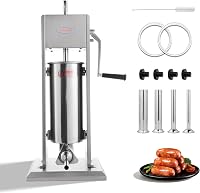
The Hakka 11 Lb/5 L Sausage Stuffer has a 2-speed system, a stainless steel vertical design, an air-release piston, and 4 stainless steel nozzles measuring 16 mm, 22 mm, 32 mm, and 38 mm.
Its title gives both the 11 lb and 5 L figures, which helps you compare the unit with the amount of sausage mixture you usually prepare. It is not a replacement for a slicer's blade, carriage, or thickness control.
The Hakka 7Lb/3L Sausage Stuffers and Vertical Sausage Makers has a 2-speed system, a stainless steel construction, an air-release piston, and 4 stainless steel nozzles measuring 16 mm, 22 mm, 32 mm, and 38 mm.
The 7 lb and 3 L figures describe a smaller capacity than the Hakka 11 Lb/5 L model. Choose between them by the batch size you plan to prepare, not by treating either one as a meat slicer.
For more tools used around a slicer, compare the best meat slicer accessories. Accessories should match your model and the task you want to complete.
How do you clean the parts of a meat slicer?
Clean the blade, carriage, food pusher, thickness plate, and surrounding surfaces after use. Unplug the machine first, remove only the parts the instructions allow, and keep water away from the motor and electrical controls.
Use a suitable food-contact cleaner and dry every part before reassembly. Residue around the blade or carriage can affect movement and make the next use less sanitary.
Our guide to the best meat slicer cleaner covers cleaner choices for this type of equipment. Follow the slicer's manual if it gives different cleaning instructions.
For food safety practices around meat handling, review the USDA meat and poultry safety guidance.
How do you choose replacement parts?
Choose replacement parts by the slicer's exact brand, model, and part name. Check the blade diameter, mounting pattern, carriage shape, pusher design, and guard fit before ordering.
A part that looks similar may not lock into place or align with the blade. Never operate the slicer with a loose guard, damaged cord, unstable carriage, or missing pusher.
The right part restores the original function of the machine. If a replacement does not fit securely, stop using it and confirm compatibility with the manufacturer.
What should you remember about meat slicer parts?
The blade cuts, the carriage moves food, the pusher holds it, and the thickness control sets the slice size. The guard, base, motor, and switch support safe and controlled operation.
Pick replacement parts by the exact model, clean food-contact pieces after every use, and keep hands away from the blade. If you also grind or stuff meat, choose the separate equipment that matches that task instead of expecting one machine to do every job.
Frequently asked questions
What is the most important part of a meat slicer?
The blade is the main cutting part, but safe slicing also depends on the carriage, food pusher, thickness control, and blade guard. A sharp blade cuts more evenly, while the pusher and guard help keep your hands away from the rotating edge.
Use every safety part as designed.
What does the carriage do on a meat slicer?
The carriage holds the food and moves it past the blade. Its smooth travel helps keep slices consistent, while the food pusher holds the meat in place as the carriage moves.
Keep the carriage clean and check that it locks or rests securely before slicing.
Can you replace meat slicer parts?
Many meat slicer parts can be replaced, including blades, food pushers, guards, knobs, and belts, but compatibility depends on the slicer model. Match the replacement to the exact model and follow the manufacturer's instructions.
Unplug the slicer before removing or installing parts.
What part controls slice thickness?
The thickness control, sometimes called the slice adjustment knob, sets the gap between the blade and the meat support plate. A smaller gap makes thinner slices, while a larger gap makes thicker slices.
Start with a small setting and adjust gradually.