How to Meal Prep with Souper Cubes
Souper Cubes meal prep works best when you portion cooled food, freeze it in measured servings, then label and group the cubes for storage. Choose tray sizes around the meals you plan to reheat.
On this page (8 sections)
- How do you meal prep with Souper Cubes?
- Which portion size should you use?
- How should you cool and fill food?
- How do you label and organize frozen portions?
- Should you leave portions in the tray or transfer them?
- How do you freeze common meal-prep foods?
- How do you remove and reheat frozen portions?
- What if Souper Cubes aren't the right fit?
Souper Cubes meal prep is a simple routine: portion cooled food into trays, freeze it until firm, then label and organize the portions for later meals. Choose a cavity size based on how much you use at once, such as a small amount of sauce or a bowl-sized serving of soup.
The tray is the portioning step, not the whole storage plan. A label and a consistent freezer location make it easier to find the right meal later.
How do you meal prep with Souper Cubes?
Cook, cool, portion, freeze, label, and store in that order. This turns one batch of food into servings you can use without thawing the whole container.
- Decide how much of each food you typically use for one meal.
- Let cooked food cool safely before portioning it.
- Fill clean tray cavities to their marked lines, leaving room for expansion where needed.
- Cover the tray and place it on a level freezer shelf.
- Once portions are solid, remove them if the tray allows, and pack them in freezer-safe bags or containers.
- Label each package with the food and date, then group it with similar meals.
A flat board or rimmed tray beneath a flexible mold can make it easier to carry from counter to freezer. Keep the mold level as you move it.
For broader container choices, see our food storage containers guide. If you are comparing tray shapes and sizes, start with these best Souper Cubes trays.
Which portion size should you use?
Match the cavity to the amount you use in one recipe or meal. Smaller portions work for ingredients and sauces, while larger cavities suit servings of soup, stew, or leftovers.
A 1/2-cup cavity can help freeze small amounts separately, so you can take out only what a recipe needs. A 2-cup cavity may be more practical when you want a larger serving ready to thaw or reheat.
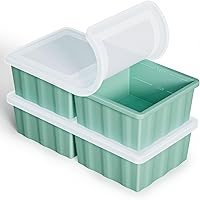
Xomoo's 1/2-cup tray has fill lines for 2 oz and 4 oz portions. Its lid has individually sealed cavities, and an embedded steel frame reinforces the tray.
For larger portions, Xomoo's 2-cup tray has 250 ml and 500 ml marks in each cavity. That makes it useful for separating food into 1- or 2-cup amounts.
GGOW's tray also has two compartments with 1- and 2-cup fill lines. The brand describes its trays as stackable and says the lid helps protect food from refrigerator smells.
Choose based on the serving you need, not just the largest cavity available. A small portion is easier to add to a recipe, while a large block can save time when you regularly eat the same meal.
How should you cool and fill food?
Cool cooked food safely before freezing it in portions. Divide a large batch into smaller, shallow containers to help it cool, and refrigerate promptly if it won't be frozen right away.
Don't pour steaming-hot food into a tray and assume the freezer will cool it quickly. Follow food-safety guidance for cooling and refrigeration, and avoid leaving perishable food at room temperature for extended periods.
Stir soups and sauces before filling so each cube gets a similar mix of solids and liquid. Fill to the tray's marks, leaving some headroom when the food may expand.
For liquid foods, place the tray on a flat surface before filling. Wipe spills from the rim so the lid can sit properly.
How do you label and organize frozen portions?
Label each package with its contents and freeze date before it goes into storage. Use a freezer-safe marker or label that stays readable in cold conditions.
Write the food name clearly, such as “tomato sauce” or “lentil soup.” Add a portion size if the cavities vary, so you know how many cubes to thaw.
Group portions by use: weeknight meals, cooking ingredients, breakfast, or single servings. Keep newer portions behind older ones when adding a new batch.
If you transfer cubes into bags, press out excess air and seal them. If you prefer rigid containers, compare best meal prep containers and choose a size that holds the portions without crushing them.
Should you leave portions in the tray or transfer them?
Use the tray for freezing, then transfer portions if you need the mold for another batch. Keeping frozen cubes in a covered tray can work when you have enough freezer space and can identify the contents.
A labeled bag or container can make it easier to sort several kinds of food together. It can also free up the tray for the next meal-prep session.
If you store soup in a larger container instead, compare best freezer containers for soup. Pick a storage method that keeps portions protected and easy to identify.
How do you freeze common meal-prep foods?
Freeze foods in portions that fit how you'll use them after thawing. A little planning prevents having to thaw more than you need.
Can you freeze rice in Souper Cubes?
Yes, cooked rice can be portioned in freezer trays for later meals. Cool it promptly, portion it, freeze it, and store the solid portions in labeled packaging.
The amount per cavity depends on whether rice is a side dish or part of a larger meal. See our guide to rice in Souper Cubes for more detail.
What about soups, stews, and sauces?
Soups, stews, and sauces are natural candidates for measured freezer portions. Stir them before filling and choose a cavity size that matches what you normally use.
Leave room for expansion, keep the tray level, and cover it before freezing. For ideas on foods to portion, browse Souper Cubes recipes.
Can you freeze mixed meals?
You can freeze a mixed meal when its ingredients hold up to freezing and reheating. Expect some foods, especially those with high water content, to change texture after thawing.
Test a small portion first if you are unsure how a recipe freezes. Keep foods with different reheating needs in separate portions.
How do you remove and reheat frozen portions?
Release portions only after they are fully frozen, using the tray's intended method. Flexible silicone may let you push from the bottom, but don't twist a full tray or force a stuck portion.
Move the food to a freezer-safe package if the tray will be used again. Thaw or reheat portions using safe methods and follow the directions for each food.
Some trays are described as oven-safe, but check the instructions for the specific tray and lid before heating. Read are Souper Cubes oven safe for guidance on that question.
What if Souper Cubes aren't the right fit?
Choose another freezer mold or container if the portion size, storage space, or tray format doesn't fit your routine. A smaller cavity may work better for sauces, while a rigid container may suit bulk storage.
Consider how many portions you freeze at once and where the trays will sit. Compare a Souper Cubes alternative if you want a different format.
The best routine is the one you can repeat: portion food you already cook, label each batch, and keep the servings grouped where you can find them. Choose a 1/2-cup tray for small additions, or a 2-cup tray for larger meal portions.
Frequently asked questions
How do you meal prep with Souper Cubes?
Cool cooked food safely, portion it into clean trays, cover and freeze until solid, then transfer the portions to labeled freezer bags or containers if the tray design allows. Record the food and date, group similar meals together, and thaw or reheat using safe methods and the food's instructions.
What foods can you freeze in Souper Cubes?
Soups, stews, sauces, cooked grains, and other foods that freeze well can be portioned in freezer trays. Leave room for expansion with liquids, cool food before freezing, and check how a food's texture changes after thawing.
Use the tray size that matches how you'll serve or reheat it.
How much food fits in a Souper Cubes tray?
Capacity depends on the tray. Some freezer trays have 1/2-cup cavities, while larger models have 1- or 2-cup portions; use the fill marks on your specific tray and leave headroom for food that expands as it freezes.
Can you stack Souper Cubes in the freezer?
Stack trays only when they sit level and the maker's instructions allow it. A rigid shelf or flat board can help support a flexible tray during transport, and leaving space around it helps avoid spills before the food freezes solid.