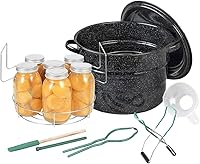
How to Choose an Electric Pressure Canner
The best electric pressure canner is one made and documented for pressure canning, not just any electric pressure cooker: check its canning mode, jar capacity, pressure control and altitude guidance, and confirm it can process low-acid foods safely before you buy.
On this page (11 sections)
- What makes a canner different from a pressure cooker?
- How do you size an electric pressure canner for home batches?
- How do digital controls help or mislead buyers?
- Which operating modes should you look for?
- Why does model-specific canning evidence matter?
- How does the Presto 01755 compare for capacity and control?
- How can vacuum sealers fit a canning budget?
- What should you check for meat, poultry and seafood?
- How do you use an electric pressure canner safely step by step?
- Can you use a pressure cooker instead of a canner?
- Which electric pressure canner should you choose?
The best electric pressure canner for home canning is a model with documented canning evidence, a clear pressure mode and enough jar room for your normal batch. A general-purpose cooker may look similar, but canning needs repeatable pressure and time.
Start with the food you plan to can most often. Low-acid foods such as vegetables, meats, poultry and seafood need pressure processing.
High-acid foods such as many fruits, jams, jellies and pickles can use a water bath method when a tested recipe calls for it.
Our team compared capacities, controls, modes and model-specific evidence. We did not test these products.
We checked the specs and maker descriptions below and noted where a tool fits canning and where it fits freezer storage instead.
What makes a canner different from a pressure cooker?
A canner is made to hold a set pressure for a set time so jars can be processed safely. A pressure cooker is mainly made to cook food faster, and its pressure may rise and fall as you cook.
That difference matters most with low-acid foods. The USDA recommends pressure canning as the safe method for vegetables, meats, poultry and seafood.
That guidance assumes the canner, pressure, time and jar size from a tested recipe.
Electric pressure canner models vary. Some are built only for canning.
Some are combination cookers with a canning program.
Some electric pressure cooker canners for canning list water bath use as well as pressure use.
Read the manual before you buy. Look for the words pressure canning, water bath, jar capacity and altitude adjustment.
If those details are missing, treat the model as a cooker, not a canner.
Firm rule: buy a canner only when the maker documents pressure canning for your food and jar size.
How do you size an electric pressure canner for home batches?
Size an electric pressure canner by jars per batch, not by the total size of the pot. A large pot with a small usable rack may fit fewer jars than you expect.
Count the jars you use most. Pints suit many home batches.
Quarts suit larger portions but take more room.
Half-pints suit jams and jellies, where a water bath method often applies.
Think about your largest normal load. A garden harvest, a bulk meat purchase or a family recipe for soup can set your minimum size.
If you can that amount only once a year, a smaller canner plus freezing may save space.
Counter space matters with electric models. Measure the footprint and the height with the lid open.
You also need room to lift hot jars and set them on a towel or rack without reaching over steam.
What capacity fits a small kitchen?
A smaller canner suits a single cook or a small household that cans a few jars at a time. It heats faster and stores more easily.
It may need more batches for a harvest.
What capacity fits a harvest?
A larger canner suits anyone who plans full batches of pints or quarts. It reduces the number of runs and gives room for a rack.
It also needs more counter space and more water.
Our canning supplies guide lists the other items you will need beside the canner, such as jars, lids, a lifter and a rack.
Firm rule: choose capacity from the jars in your biggest normal batch, then check counter space.
How do digital controls help or mislead buyers?
Digital controls help when they show pressure, time and mode clearly. You can see when pressure is reached, how long processing takes and when the unit is cooling.
Some controls offer presets for foods or jar sizes. A preset is useful only when it matches a tested recipe.
It does not make an untested time safe for a new food or a different jar size.
Look for a pressure display that is easy to read from a standing position. A lid lock or pressure release that is clear to use also matters.
You should be able to tell whether pressure is building and whether the lid can open.
Analog gauges offer a different kind of control. They show pressure on a dial, but you must watch and adjust heat to hold it.
That system can work well, yet it asks for more attention during a long batch.
Do not judge a best electric pressure canner by the number of cooking programs. Canning needs one reliable pressure canning mode, stated in the manual, with guidance for jar sizes and altitude.
Firm rule: value a clear canning mode and pressure display more than extra cooking presets.
Which operating modes should you look for?
Look for pressure canning and water bath modes if you want one appliance for both methods. Not every electric model offers both, and jar limits can differ between modes.
Pressure mode is the priority for low-acid foods. Water bath mode is for high-acid foods such as fruits, jams, jellies, pickles and salsa when a tested recipe calls for boiling-water processing.
Check whether the water bath mode can hold a full rolling boil or a steady simmer. That detail affects processing time.
The manual should state which jar sizes fit in each mode.
Some models also cook, steam, brown or keep food warm. Those modes can help with meal prep, but they do not add canning safety.
Do not use a cooking mode as a substitute for a canning mode.
Our guide to how to use an electric pressure canner walks through setup, loading and storage in general terms. Read it beside the manual for your exact model.
Firm rule: confirm both modes in the manual if you plan electric pressure canner and water bath work.
Why does model-specific canning evidence matter?
Model-specific evidence means tested times and pressures for that canner. A recipe written for one model may not give the same result in another model, even with the same jar size.
Maker guidance should cover food type, jar size, headspace, liquid, pressure and processing time. It should also cover altitude, because pressure needs adjustment at higher elevations.
Be careful with general cookbooks. A best electric pressure canner cookbook can give useful recipes, but the book should match your canner and current canning guidance.
Buyer reviews offer patterns, not proof. Owners often mention ease of use, jar fit or cleaning, yet those comments do not confirm a processing time.
Use reviews to spot practical issues, then check the manual for safety details.
Presto describes the Presto 01755 16-Quart Aluminum Pressure Canner and Cooker as a heavy-gauge aluminum canner for home pressure canning. For other Presto pressure canner options, compare the guide.
It includes a cooking and canning rack and an 80-page instruction and recipe book.
Its stated mason jar capacity is 12 half-pints, 10 pints or 7 quarts for pressure processing.
Firm rule: trust tested guidance for your exact model over reviews or generic recipes.
How does the Presto 01755 compare for capacity and control?
The Presto 01755 offers 16 quarts of capacity with manual pressure control. It is not an electric canner, so it sits in this guide as a capacity and control comparison point.
It holds 12 half-pints, 10 pints or 7 quarts for pressure processing, according to Presto. For boiling-water processing, Presto lists half-pints and pints only.
That limit matters if you plan quart jars for water bath work.
Control is by a deluxe pressure dial gauge. Presto says the gauge registers precise processing pressures, which matters at high altitude.
You must watch the gauge and adjust heat to hold pressure.
The air vent and cover lock feature lets pressure build only when the cover is closed properly. It also prevents the cover from opening until pressure is safely reduced and gives a visual sign of pressure inside.
The canner doubles as a boiling-water canner for fruits, jams, jellies, pickles and salsa in half-pint and pint jars. It also works as a large pressure cooker for meats, poultry, soups and desserts.
Presto says it works on gas, electric and smooth-top ranges and is made of heavy-gauge aluminum for fast, even heating.
Read our how to use a Presto electric pressure canner guide with care, and match each step to the Presto manual for this model. If you want electric operation, compare electric models separately rather than treating this manual canner as electric.
Firm rule: choose the Presto 01755 for large manual batches, not for electric convenience.
How can vacuum sealers fit a canning budget?
Vacuum sealers fit freezer storage, not jar canning. They can help you store extra meat or meals in the freezer while you build experience with canning.
The FoodSaver V4400 2-in-1 Vacuum Sealer Machine has automatic bag detection and a starter kit. The kit includes an 11-inch by 10-foot vacuum seal roll, 3 quart vacuum seal bags, 2 gallon vacuum seal bags, 3 quart zipper bags and 2 gallon zipper bags.
FoodSaver says the V4400 has automatic moisture detection and a removable drip tray. It also has built-in roll storage and a cutter, plus LED light indicators to guide sealing.
The machine works with FoodSaver 8-inch and 11-inch vacuum seal rolls, pre-made bag sizes, FreshSaver zipper bags, Fresh Containers and the Quick Marinator, and optional mason jar sealers are listed.
The FoodSaver FM2100 Vacuum Sealer Machine offers one-touch sealing, roll storage and a cutter, with dry and moist food settings. FoodSaver lists an accessory port and hose, plus a starter roll and bags.
The package includes an 11-inch by 10-foot roll, 3 quart pre-cut bags, 2 gallon pre-cut bags and an accessory hose.
FoodSaver says the FM2100 has dual heat sealing strips and is compatible with a handheld sealer and other FoodSaver accessories. Its stated size is 16.3 by 9.2 by 4 inches, and it weighs 6.6 pounds, which makes it easier to store than a larger sealer.
Use a vacuum sealer for meat you freeze, not as a replacement for pressure canning. For jar sealing, lids and rings matter more.
Our best canning lids and rings guide helps you match lids to jar type.
Firm rule: buy a vacuum sealer for freezer storage, and buy lids and rings for jar canning.
What should you check for meat, poultry and seafood?
Meat canning needs pressure processing with a tested recipe. Do not use a water bath method for meat, poultry or seafood, and do not copy a time from a different canner.
Check the jar size first. Pints and quarts need different processing times.
Headspace, packing style and added liquid also affect the result, so follow the recipe for your model.
Our guide on pressure canning meat in an electric canner explains the questions to ask before you load a batch. Use it with the manual and with current canning guidance for your food.
Plan for cooling and storage after the batch. Jars need time to cool, seals need checking and labels need dates.
Store canned meat in a cool, dark place away from heat.
Freeze extra meat in vacuum bags if you do not plan to can it right away. The FoodSaver models above can help with that freezer step, but they do not make raw meat safe for shelf storage.
Firm rule: pressure-process meat only with a tested recipe for your canner and jar size.
How do you use an electric pressure canner safely step by step?
Safe use starts with reading the manual for your exact model. Controls, lids, vents and racks differ, and generic steps can miss a key detail.
Check jars, lids and rings before you start. Use the jar size in the recipe, fill to the stated headspace and wipe the rim clean.
Add the amount of water or liquid the manual requires for pressure canning or water bath use.
Place jars on the rack with space between them. Close and lock the lid as the manual directs.
Select the canning mode, set the pressure and time from the tested recipe, then start the cycle.
Do not open the lid during processing. Let pressure fall naturally unless the manual directs a different release method.
After the cycle, let jars cool undisturbed, then check seals and store them with dates.
Our pressure canner vs water bath canner guide explains when each method fits. That choice should come before you buy, because one appliance may not suit both methods for all jar sizes.
Firm rule: follow the manual and a tested recipe in order, and do not open the lid mid-cycle.
Can you use a pressure cooker instead of a canner?
A pressure cooker is not a substitute for a canner unless the maker documents canning use. The key issue is whether it can hold the required pressure for the full processing time.
Our pressure canner Instant Pot guide covers that question for a popular cooker. The same logic applies to other electric pressure cooker canners for canning claims.
Check the maker's canning documentation, not a general cooking manual.
Look for stated jar capacity, pressure settings and altitude guidance. If the maker gives no canning times, do not invent them.
Cooking rice, beans or soup does not prove a jar will process safely.
A manual canner such as the Presto 01755 gives a clear comparison point. It has a dial gauge, a cover lock and stated jar capacities for pressure and boiling-water processing.
An electric model should give equally clear canning evidence before you choose it.
For small jars, a best manual vacuum sealer for mason jars can help with freezer storage or dry goods, but it does not seal canning jars for shelf storage.
Firm rule: use a cooker for canning only when the maker documents canning with tested times.
Which electric pressure canner should you choose?
Choose the best electric pressure canner by documented canning evidence first, then capacity and controls. That order protects safety and keeps the choice practical.
Pick a smaller electric canner if you can a few pints at a time and need easy storage. Pick a larger model if you process full batches of pints or quarts.
Confirm water bath jar limits if you plan jams, jellies and pickles in the same appliance.
Pick digital controls when you want a clear pressure and time display. Pick a manual gauge model such as the Presto 01755 when you do not mind watching pressure and want large stated capacities.
Pick vacuum sealers such as the FoodSaver V4400 or FM2100 for freezer meals, not for shelf-stable jars.
Revisit your choice if the manual lacks altitude guidance, jar capacities or tested times. Those gaps matter more than extra cooking programs or a lower price tier.
Firm rule: buy the model whose manual proves it can can your food, in your jars, at your altitude.
Frequently asked questions
Can any electric pressure cooker be used for pressure canning?
No. Use only a model made and documented by its maker for pressure canning, with tested processing times and pressures for the food and jar size you plan.
A cooker that browns, steams or slow cooks may not hold the exact pressure needed for canning.
What capacity electric pressure canner should I buy?
Buy the smallest capacity that fits your largest batch without crowding, then consider storage space and frequency of use. Count jars by the size you use most, such as pints or quarts, and check the maker's stated jar capacities rather than estimating.
Can an electric pressure canner also do water bath canning?
Some electric models offer a water bath mode, but not all do. Check the manual for a boiling-water mode, jar limits for that mode, and tested times for fruits, jams, jellies, pickles and salsa before assuming dual use.
How do digital controls help with pressure canning?
Digital controls can display pressure, time and mode, and some offer preset canning programs. They do not replace tested recipes.
You should still match the food, jar size, headspace, pressure and processing time to guidance for your model.