How to Choose a Chamber Vacuum Sealer for Mylar Bags
Choose a chamber vacuum sealer for Mylar bags by confirming it can seal your exact bag material and thickness at a suitable temperature. Then compare chamber dimensions, seal-bar length, controls, and the maker's instructions for operating and maintaining the pump.
On this page (10 sections)
- Can a chamber vacuum sealer seal Mylar bags?
- How does sealing temperature affect a Mylar seam?
- What chamber and seal-bar size fits your bags?
- Do chamber vacuum sealers need special bags?
- What pump details should you check?
- Does an external vacuum sealer work for Mylar bags?
- What other features matter for a chamber sealer?
- How should you check the seal after closing a bag?
- How do you choose a chamber vacuum sealer for Mylar bags?
- Sources to check
Choose a chamber vacuum sealer for Mylar bags by checking material compatibility and sealing temperature first. A machine that creates a vacuum may still lack a seal bar suited to your bag's film or thickness.
Next, confirm that the chamber fits your filled bags and the seal bar can close across their openings. Read both the machine and bag makers' instructions before choosing a model or heat setting.
If you're still comparing machine types, start with what exactly is a chamber vacuum sealer. This guide focuses on the checks that matter when you plan to seal Mylar bags.
Can a chamber vacuum sealer seal Mylar bags?
It can if the machine's sealing system is compatible with the bag's material and thickness. Check the machine maker's instructions for supported film types before buying or setting it up.
A chamber sealer removes air from the chamber around the bag, then seals the bag opening. That process differs from an external sealer, which draws air through channels in a textured bag.
Read how exactly a chamber vacuum sealer works to understand the process.
“Mylar” is a brand name often used to describe polyester film, but bags can vary in construction and thickness. Don't assume that every bag sold as Mylar works with every chamber machine.
Ask these questions before you buy:
- Does the sealer maker name your bag material as compatible?
- Does it support the bag's thickness?
- What heat or sealing-time settings does the maker recommend?
- Can the seal bar close across the bag opening?
- Does the bag maker permit heat sealing with that type of bar?
A clear compatibility statement for the exact bag is more useful than a general claim that a machine seals bags. If the instructions don't identify the material, ask the machine maker before using it.
For a broader look at compatible pouch types, see what bags work with a chamber vacuum sealer.
How does sealing temperature affect a Mylar seam?
Use the temperature and sealing time specified for your bag and machine. Too little heat may leave an incomplete seam, while excessive heat can damage the film.
Some chamber machines offer adjustable seal time or temperature, while others use fixed settings. The controls and their ranges vary, so compare the manual's directions with the exact bag you plan to use.
A reliable seal is a combination of factors, not temperature alone. Film thickness, layers, seal-bar width, pressure and how flat the opening sits can all affect the result.
Before sealing a full batch, follow the makers' instructions and inspect a sample seam. Look for an even fused line without wrinkles, gaps, burnt spots or film that pulls apart easily.
Don't rely on a universal temperature chart unless it comes from the maker of your specific bags and sealer. Heat settings that work on one film or machine may not transfer to another.
What chamber and seal-bar size fits your bags?
Choose a chamber that fits your largest filled bag, then check that the opening can lie flat across the seal bar. Bag dimensions alone don't tell you whether a full pouch will fit comfortably.
Measure the bag when filled to the height you expect to use. Leave room for the open edge to reach the bar without folding or crowding the lid.
Check both the usable chamber dimensions and the seal-bar length. A bag can fit inside the chamber but still have an opening too wide for the bar to seal in one pass.
| Check | What to compare |
|---|---|
| Chamber width | The width of the filled bag, including its contents |
| Chamber depth | The bag's front-to-back footprint when positioned for sealing |
| Chamber height | The filled pouch's height when its top edge rests at the bar |
| Seal-bar length | The bag opening width you need to seal in one pass |
| Counter space | The machine footprint plus room to load bags and lift the lid |
For bags wider than the bar, ask the maker whether overlapping seals are allowed. Don't improvise a second seal unless the machine's instructions explain how to do it.
Think about how many bags you seal in one session, too. A chamber that barely fits one pouch may slow down repeated batches or make loading awkward.
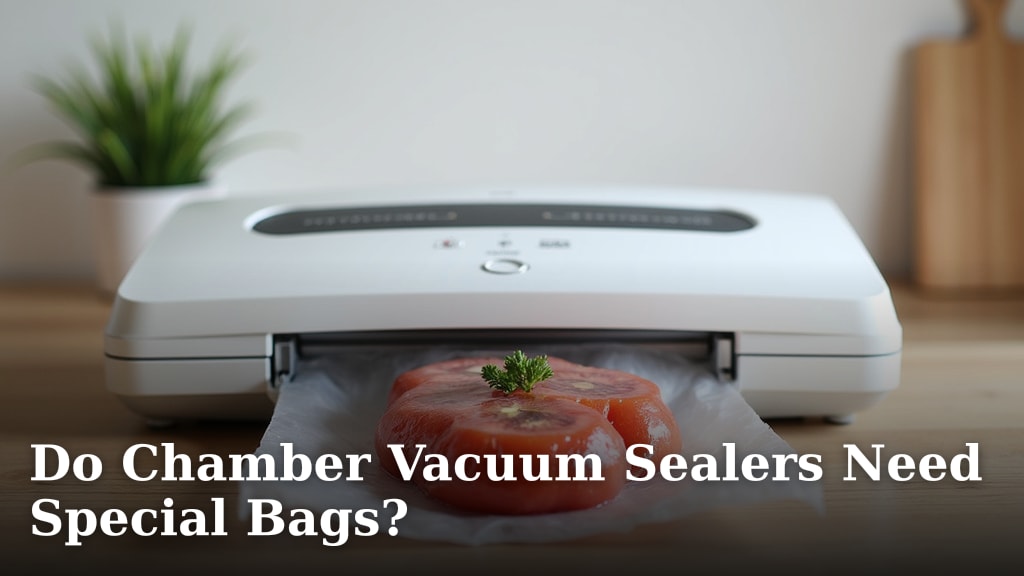
Do chamber vacuum sealers need special bags?
Some chamber sealers work with smooth bags, while other machines or tasks may call for a different bag construction. Confirm the requirements for your exact machine and bag before buying supplies.
Smooth bags can be suitable for chamber sealing because the vacuum is drawn from the chamber around the pouch. External sealers commonly need textured bags that provide channels for air to escape, though the machine maker's instructions control.
Mylar bags add another consideration: the film may differ from the bags designed for routine chamber sealing. Check the material and thickness in both makers' guidance.
Our guide to whether chamber vacuum sealers need special bags explains the bag-style question in more detail.
Don't choose bags by appearance alone. A smooth pouch that seals well in one machine may not be approved for another machine's heat bar.
What pump details should you check?
Follow the vacuum sealer maker's pump oil and maintenance instructions. Oil type and change intervals depend on the pump, so don't assume a general-purpose oil is suitable.
Some chamber sealers use oil-lubricated pumps, while others use different designs. Confirm the pump type and required oil before buying maintenance supplies.
The JB Industries DVO-24 is vacuum pump oil, not a chamber sealer. Its description identifies it as non-detergent oil for vacuum pumps, and its product information gives different viscosity references, so use it only if your pump maker specifies a compatible oil.
TSI Supercool V32 is also vacuum pump oil. Its product information describes synthetic oil with 68 cSt viscosity, but that alone doesn't show that it suits a particular chamber sealer.
Don't pour oil into a pump based only on the product name or a broad claim of compatibility. Check the sealer manual or ask the pump maker to confirm the required type.
Does an external vacuum sealer work for Mylar bags?
An external sealer is a different machine type, and its bag requirements may differ from a chamber sealer's. Check that its sealing method suits the bag before buying it for Mylar.
The FoodSaver V4400 is an external vacuum sealer with automatic bag detection and a handheld sealer for compatible zipper bags, containers and canisters. Its stated compatibility includes FoodSaver rolls and premade bag sizes, but that doesn't confirm Mylar compatibility.
If you already own an external machine, check its instructions for the specific bag and seal method. Don't infer Mylar compatibility from the fact that it seals bags.
What other features matter for a chamber sealer?
Prioritize usable size, compatible sealing controls and clear pump instructions. Extra features only help if they match the bag sizes and sealing routine you plan to use.
Compare these points across machines:
- Seal controls: Look for settings or instructions that cover your film and thickness.
- Bar length: Confirm the opening can be sealed in one pass.
- Chamber size: Fit your largest filled pouch without crowding.
- Pump guidance: Check the maintenance requirements and oil specification.
- Operating instructions: Make sure the maker explains loading, sealing and troubleshooting.
- Work space: Leave room for bags and safe access to the lid and controls.
A chamber model can be a poor fit if it is too small, even when its sealing system supports the bag. Likewise, a large chamber isn't useful if the machine maker doesn't confirm the film type.
How should you check the seal after closing a bag?
Inspect the seam before storing the bag. A continuous, flat seal with no visible gaps is a useful first check, but follow any test method the bag or machine maker recommends.
Let the seam cool if the instructions call for it, then look along its full length. Wrinkles, trapped debris or a section that peels open can compromise the closure.
If a test pouch fails, adjust only the settings or loading steps allowed by the maker. Change one permitted setting at a time so you can tell what improved the seam.
For long-term storage, a sealed pouch is only one part of the plan. Choose packaging and storage conditions that suit the food, and follow recognized food safety guidance for temperature and handling.
How do you choose a chamber vacuum sealer for Mylar bags?
Choose the machine only after confirming the exact bag material, thickness, seal-bar capacity and recommended settings. If you are considering a VacMaster, compare VacMaster chamber vacuum sealers.
Then make sure the chamber fits your filled pouches and the pump instructions are clear.
Pick a smaller chamber if your bags fit with room to lay the opening flat and you have limited counter space. Pick a larger one when your regular pouch size needs more chamber or bar capacity, provided the machine maker confirms bag compatibility.
Use the manual's pump-care directions to choose maintenance supplies. The right chamber vacuum sealer for Mylar bags is the one whose maker supports your bag and explains how to seal it safely.
Sources to check
- Read the machine maker's manual for bag materials, heat settings, chamber limits and pump care.
- Read the bag maker's instructions for film compatibility and sealing guidance.
- For food handling and storage, consult the USDA Food Safety and Inspection Service.
Frequently asked questions
Can a chamber vacuum sealer seal Mylar bags?
Some chamber sealers can seal Mylar bags, but compatibility depends on the machine's seal bar and the bag's material and thickness. Check the sealer maker's instructions for approved materials and temperature settings, then confirm the bag maker's guidance.
A chamber alone doesn't guarantee a sound seal.
Do Mylar bags need an impulse sealer?
Mylar bags are often sealed with an impulse sealer, but some chamber machines may also seal compatible bags. Check whether the chamber sealer's heat bar supports the bag material and thickness.
If the machine maker does not confirm compatibility, use a sealer intended for that bag.
What temperature should I use to seal Mylar bags?
Use the temperature or heat setting specified by the sealer maker for the exact Mylar material and thickness. There is no safe universal setting for every bag, since film construction and seal-bar design vary.
Follow the bag maker's guidance too, and check the finished seam for gaps or wrinkles.
Can I vacuum seal oxygen absorbers inside Mylar bags?
You can use oxygen absorbers in suitable dry-food storage, but vacuum sealing and oxygen absorption are different methods. Follow the absorber maker's instructions for the food and bag size, and check the sealer maker's guidance before pulling a vacuum on the bag.
Don't use this method for foods that need refrigeration.
What chamber size should I choose for Mylar bags?
Choose a chamber that fits the largest bag you expect to seal, with enough room for its opening to sit flat across the seal bar. Compare usable chamber width and depth with the filled bag, not just its empty dimensions.
A larger chamber can take more counter space, so measure your setup too.