Chest Freezer vs Upright Freezer: Which to Buy? (November 2026)
Choose a chest freezer for bulky, infrequent storage and an upright for daily shelf access. In a chest freezer vs upright freezer decision, reach, room shape and shopping habits matter more than a small capacity gap.
On this page (13 sections)
- Chest freezer vs upright freezer: the quick verdict
- The two layouts side by side
- Storage access: shelves you see or a bin you reach into
- Chest freezer vs upright freezer: floor space and room fit
- Capacity: what cubic feet mean in daily use
- Organization: how to keep food findable
- Reach and comfort: bending, lifting and seeing
- Garage and basement use: temperature range matters
- Convertible modes: when fridge space helps
- Defrosting, cleaning and seals
- Which size and layout for small rooms?
- Who should buy which?
- Final verdict on chest freezer vs upright freezer
Choose a chest freezer for bulky, infrequent storage and an upright for daily shelf access. In a chest freezer vs upright freezer comparison, the right pick depends on how you shop, where the unit stands and how your body reaches inside.
The upright models here give you shelves you can see at once. The chest models give you open space that fits large packs without shelf gaps getting in the way.

 Best for large chest storage
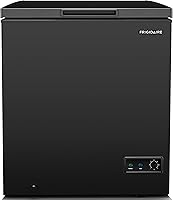
FRIGIDAIRE EFRF7003-BLACK Chest Deep Freezer
Chest freezer vs upright freezer: the quick verdict
Pick upright for access and chest for open bulk space. That rule settles most cases before you look at brands or capacities.
If you grab frozen vegetables, meals or ice cream every day, shelves keep choices visible. If you store whole meats, large bags or batch meals for later, an open chest bin fits them with fewer shape limits.
Our freezers guide helps if you are still unsure which freezer type fits your home.
Read the sections below for floor space, reach, organization, garage use and care. Then use the verdict at the end to make a final pick.
The two layouts side by side
An upright stacks storage vertically and a chest stacks it in one deep bin. Their footprints and heights differ even at similar capacities.
| Feature | Chest layout | Upright layout |
|---|---|---|
| Opening | Top lid | Front door |
| Storage shape | One open bin, often with a basket | Shelves behind a door |
| Floor space | Wider and deeper for the same capacity | Narrower footprint, taller cabinet |
| Height | Lower, easier to reach over | Taller, top shelves may be high |
| Best food | Bulky packs, bags, large boxes | Flat containers, meals, daily items |
The Midea 7.1 Cu.ft Upright Freezer measures 21.7 in wide, 22.4 in deep and 50 in high. The FRIGIDAIRE 7 Cu.
Ft chest measures 37 in wide, 26 in deep and 33 in high, so it covers more floor but stays lower.
The EUHOMY 2.1 Cu.Ft upright is 17.5 in wide, 17 in deep and 30.8 in high. The Midea 3.5 Cu.ft chest is 21.5 in wide, 17.6 in deep and 33.5 in high, so both small models fit tighter spots.
| Product | Best for | Capacity | Size (W x D x H) | Opening | Our score |
|---|---|---|---|---|---|
| Midea 7.1 Cu.ft Upright Freezer | flexible upright storage | 7.1 cu ft | 21.7 x 22.4 x 50 in | Front door, reversible | 9.6 |
| FRIGIDAIRE EFRF7003-BLACK Chest Deep Freezer | large chest storage | 7 Cu. Ft | 37 x 26 x 33 in | Top lid | 9.2 |
| EUHOMY 2.1 Cu.Ft Upright Freezer | compact upright space | 2.1 Cu.Ft | 17.5 x 17 x 30.8 in | Front door, reversible | 9.1 |
| Midea 3.5 Cu.ft Chest Freezer | small convertible chest use | 3.5 Cu.ft | 21.5 x 17.6 x 33.5 in | Top lid | 8.7 |
Storage access: shelves you see or a bin you reach into
Upright shelves show food at a glance, and a chest bin hides it until you lift or move packs.
With an upright, you open the door and scan shelves by category. That helps when more than one person uses the freezer or when you cook from frozen meals during the week.
With a chest, you open the lid and work from above. The top layer is easy to reach, while the bottom can mean bending and lifting heavy groups.
The FRIGIDAIRE chest includes a removable vinyl coated wire basket for small items near the top. The Midea 3.5 Cu.ft chest includes a removable plastic basket for the same reason.
The Midea upright has 4 removable glass shelves, so you can adjust spacing for tall containers. The EUHOMY upright has 2 shelves, which is simpler but offers fewer levels.
Chest freezer vs upright freezer: floor space and room fit
An upright fits a narrow wall spot, and a chest fits a wide, low spot. Measure width, depth, height and opening room before you order either one.
A chest needs room above the lid to open fully. It also needs side space so you can stand beside it and reach across the bin without twisting.
An upright needs room in front for the door swing. Its reversible door helps when a wall or appliance blocks one side.
The Midea 7.1 Cu.ft upright and the EUHOMY upright both have reversible doors, which helps in dorms, bedrooms or small kitchens.
Use painter's tape to mark the footprint and the full opening path. Then check whether another person can still pass while you load groceries.
Capacity: what cubic feet mean in daily use
Cubic feet tell you volume, but shape tells you what fits. A chest bin accepts bulky shapes, while upright shelves reward flat, stackable containers.
A 7 cu ft chest can hold large family packs with fewer shelf gaps to work around. A 7.1 cu ft upright holds a similar volume, yet tall packs must fit between shelves.
A 3.5 cu ft chest suits 1 to 3 people, according to Midea, or works as a second freezer. A 2.1 cu ft upright suits small hauls, snacks and overflow in a compact room.
Start with your usual shopping trip, not your biggest one. List bulk meat, vegetables, bread and prepared meals, then note which items are tall or awkward.
If you want a smaller chest option, our best small chest freezer picks can help you compare compact chest models.
Organization: how to keep food findable
Shelves organize by level, while a chest needs groups you can lift. Simple systems beat a perfect system you stop using.
For an upright, assign each shelf a job. One shelf can hold meats, one can hold vegetables and one can hold prepared meals, with labels facing forward.
For a chest, group food into small categories you can lift by hand. Avoid one heavy bottom layer that forces you to move everything to find one pack.
Use a basket for daily small items and reserve the deep bin for reserve food. Date packages so older food moves toward the top next time you load groceries.
The FRIGIDAIRE and Midea chest baskets both help separate small items from the main bin.
Reach and comfort: bending, lifting and seeing
A chest asks you to bend down, and an upright asks you to reach up or crouch down. Your height, strength and any mobility limits should guide this choice.
A low chest can be easier to reach over than a tall upright top shelf. Yet reaching the bottom of a chest can strain your back if packs are heavy.
An upright puts middle shelves at a comfortable height for many people. Its bottom shelf may still need crouching, and its top shelf may need a step stool.
The EUHOMY upright has adjustable feet for uneven floors. The Midea chest also has adjustable legs to help you fit placement.
Think about who will load and unload the freezer most often. A layout that works for one person may not work for another in the same home.
Garage and basement use: temperature range matters
Choose a garage model by its stated temperature range, not by freezer shape. A hot or cold garage can push any freezer outside its safe range.
The Midea 7.1 Cu.ft upright is garage ready for 0°F to 110°F, according to Midea. That range covers many garages and basements through the seasons.
The Midea 3.5 Cu.ft chest is garage ready for 0°F to 110°F in freezer mode and 38°F to 110°F in fridge mode. That detail matters if you plan to use its convertible fridge mode in a cold space.
The FRIGIDAIRE chest and EUHOMY upright do not state the same garage range in the data here. Check the exact model details before placing either in a non-climate-controlled room.
If garage use is your main goal, our best chest freezer commercial guide may help you compare chest models built for heavier duty settings.
Convertible modes: when fridge space helps
Convertible models add seasonal flexibility, but they do not replace a main refrigerator. They help with parties, harvests, overflow and holiday meals.
The Midea 7.1 Cu.ft upright switches between freezer mode and refrigerator mode with one touch. Midea says the 360° cooling system drops temperature from 54°F to -0.4°F in 3 hours in freezer use.
The Midea 3.5 Cu.ft chest also converts between freezer and fridge modes. That makes it useful as a second unit for drinks, produce or party food.
Do not buy convertible only for the feature if you need full freezer capacity all year. Decide which mode you will use most, then size the unit for that mode.
The EUHOMY upright is freezer only in the data here, with a 5-level thermostat from -7°F to 11°F. The FRIGIDAIRE chest is also freezer only, with a 7-setting adjustable thermostat.
Defrosting, cleaning and seals
Chest freezers need planned defrosting, while uprights need seal and shelf care. Both need cleaning, airflow and a quick check for packaging left across the seal.
The FRIGIDAIRE chest has an exterior defrost drain to help water leave during defrosting. Plan where food will stay frozen before you start, and protect the floor from meltwater.
Use gentle cleaning tools on the aluminum interior liner. Avoid scraping unless the manual allows it.
Upright shelves can be wiped and rearranged more easily than a deep chest bin. Wipe spills promptly so odors do not linger, and keep vents clear.
Check door seals often, especially on an upright that opens many times a day. A seal blocked by a bag can let warm air in.
If a gasket wears or tears, our universal freezer door gasket guide can help you measure and choose a replacement.
Which size and layout for small rooms?
Small rooms favor a compact upright or a small chest with a clear lid path. Measure the wall, the doorway and the walking path before you choose.
The EUHOMY 2.1 Cu.Ft upright is only 30.8 in high, so it can fit under counters or in a corner where a tall upright cannot. It has 2 shelves and a reversible door.
The Midea 3.5 Cu.ft chest is 33.5 in high and 21.5 in wide, so it fits a small garage corner or basement nook. Its lid needs clear space above.
For a larger narrow space, our best frost free upright freezer picks can show other upright options. For a 20 cu ft question, our upright freezer frost free 20 cu ft guide helps you judge whether that size fits your room.
For garage placement, our best garage ready upright freezer guide can help you compare uprights for warm or cold rooms.
If you lean toward Frigidaire chest models, our best chest freezer frigidaire guide can help you compare that brand line.
Who should buy which?
Buy upright for daily access and chest for bulk reserve storage. The best pick follows your shopping and cooking pattern.
Choose the Midea 7.1 Cu.ft Upright Freezer if you want readable shelves, fridge conversion and a stated garage range. It suits families who grab food often.
Choose the FRIGIDAIRE 7 Cu. Ft chest if you want open space for large packs, meal prep and reserve food.
Its basket and defrost drain help with everyday chest use.
Choose the EUHOMY 2.1 Cu.Ft upright if your room is small and your hauls are small. It suits dorms, bedrooms, offices and compact kitchens.
Choose the Midea 3.5 Cu.ft chest if you want a small convertible chest for a garage or basement. It suits 1 to 3 people or a second freezer for seasonal overflow.
Final verdict on chest freezer vs upright freezer
Pick the layout your hands will use every week, then size it for your largest normal haul. That order prevents a cheap mistake.
Pick a chest freezer vs upright freezer winner by reach first. If bending into a bin is hard for you, shelves win quickly.
If shelf gaps frustrate your food shapes, a chest wins quickly.
Pick the Midea 7.1 for flexible upright storage with convertible modes. Pick the FRIGIDAIRE 7 cu ft chest for large open storage with a basket.
Pick the EUHOMY 2.1 upright for compact shelf access. Pick the Midea 3.5 chest for small convertible chest storage.
Measure the room, check the temperature range and list your usual foods before you order. Then choose the model that matches those three facts, not the one with the loudest claim.
Frequently asked questions
Is a chest freezer or upright freezer better for most homes?
A chest freezer suits bulky packs and food you reach less often, while an upright suits daily access on shelves. Most homes choose based on reach and room shape first, then capacity, because a layout you can use comfortably will get used more often.
Which freezer takes less floor space?
An upright usually takes less floor space because it stacks storage vertically, while a chest spreads storage across width and depth. Measure the cabinet, the door or lid swing and ventilation clearances together, since a small footprint still needs workable space in front.
Can a chest freezer and upright freezer hold the same amount?
Yes, if you pick matching capacities, but usable space differs by shape. A chest gives one open bin for large packs, while an upright splits space into shelves that help organization yet can limit tall containers between each level.
Which layout is easier to organize?
An upright is easier to organize by shelf for meals and food types, while a chest needs grouped bins or a basket to stop digging. Whichever you pick, label packages, rotate older food forward and keep heavy groups small enough to lift safely.