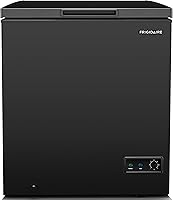
Freezers: The Complete Buying Guide
What type of freezer is best depends on how you store and reach food: choose a chest freezer for efficient bulk storage, an upright for easier access, and a convertible model when your needs change by season. Pick the type and size that match your food load, space, and placement first.
On this page (15 sections)
- Chest, upright or convertible: what type of freezer is best?
- How do you size a freezer for your food load?
- What type of freezer is best for a garage or basement?
- How does placement change freezer choice?
- Chest freezer examples for bulk and meal prep
- Upright and convertible examples for access and flexibility
- How should you compare capacity, dimensions and controls?
- What is a manual defrost freezer and when is it worth it?
- How do you organize a freezer so food gets used?
- How do you keep frozen food safe and at the right temperature?
- How much energy use and noise should you expect?
- How do you choose locks, wheels and other extras?
- Which sizes and types should you compare next?
- Explore freezers by topic
- So, what type of freezer is best for you?
What type of freezer is best depends on how you store and reach food: choose a chest freezer for efficient bulk storage, an upright for easier access, and a convertible model when your needs change by season. This guide explains each type, how to size it, and which features matter most.
Start with your food habits, not the cabinet. List the meals, meat, vegetables, bread and treats you want to keep at the same time.
Add food already frozen when the next grocery trip arrives. That list tells you more than household size alone.
Also decide where the freezer will live. A kitchen corner, a basement, a utility room and a garage each impose different limits on size, noise, heat and access.
Measure the floor, the door route, the lid or door swing, and the space you need to stand and sort food.
We compared the main freezer types and checked the specs on the example models below. Our score weighs specs, features and buyer feedback against what you are shopping for.
Use the decision rules in each section to narrow your choice before you compare brands.
Chest, upright or convertible: what type of freezer is best?
A chest freezer is best for bulk storage per square foot, an upright is best for easier access, and a convertible is best when you need fridge and freezer modes at different times. Your daily habit decides the winner, not a single style.
Chest freezers open from the top and usually keep cold air inside when the lid is open. That shape helps them hold a steady temperature and store large bags, boxes and meat packages.
The trade-off is bending and digging for food at the bottom.
Upright freezers open from the front like a refrigerator. Shelves and bins let you see food at eye level, which helps you use what you own before it gets forgotten.
The trade-off is a larger footprint for the same usable volume and more cold air loss each time the door opens.
Convertible models can switch between fridge and freezer modes. They suit people whose needs change with the season, such as extra fridge space during harvest or extra freezer space during holidays.
They cannot run both modes at once, so capacity is shared rather than doubled.
Our chest freezer vs upright freezer guide walks through the daily-use differences in more depth. Read it if you are torn between a top-opening chest and a front-opening upright.
How do you size a freezer for your food load?
Size a freezer around your largest planned load, with room left to sort and reach food. A small overflow chest works for a light load, while a mid-size model suits regular meal prep and bulk groceries.
Use capacity bands as a starting point, not as a strict rule. A 3 to 4 cu ft freezer can suit one person or a couple who want extra meals and grocery overflow.
A 5 to 7 cu ft freezer suits a small household that freezes meals, meat and vegetables on a regular schedule.
Larger freezers make sense for a defined bulk habit. That habit might be a garden harvest, a large meat order, batch cooking for a family, or seasonal game and fish.
If you cannot name that load, extra capacity may take up floor space without helping you.
The Kismile measures 20.67 in wide, 17.12 in deep and 31.89 in high. Its 3.2 cu ft capacity fits a corner, dorm, kitchen or office.
An adjustable thermostat with seven grades runs from 6.8 F to -7.6 F, with 0 stopping cooling.
Two removable baskets keep small items near the top. A balanced hinge holds the lid open from 45 to 90 degrees.
Kismile says the unit uses 0.68 kilowatt-hours per day and runs below 40 dB.
That size suits breast milk, meat, aquatic products, cold drinks and quick freezing for a small home. It will feel tight if you plan to freeze a harvest or a large meat order.
Its compact footprint is the point, so judge it by light overflow use.
If you want a similar small footprint with a different layout, see our best small white chest freezers guide. It compares color and cabinet options for tight spaces.
What type of freezer is best for a garage or basement?
A garage-ready freezer is best for an unheated garage or basement, because standard models may not run well in hot or cold ambient temperatures. Confirm the approved temperature range before you place any freezer outside a climate-controlled room.
Basements are often cooler and more stable than garages, but they can still be damp, dusty and hard to access. Garages swing widely with the season.
Heat can make the compressor work harder, and cold can make a freezer warm up when you need it to stay frozen.
The Frigidaire EFRF5003-BLACK has 5.0 cu ft of capacity and measures 28 in wide, 23 in deep and 35 in high. It is freestanding with a top door.
An adjustable thermostat has seven settings. A removable vinyl-coated wire basket holds small items near the top.
An exterior defrost drain helps with clean-up, and a power-on indicator light shows power status at a glance. Frigidaire describes an aluminum interior liner.
The model is listed as garage-ready, so check the approved range for your own garage before you rely on it there.
This 5 cu ft size suits large families and people who meal prep. It holds frozen appetizers, treats, freezer meals and meats.
Its width is wider than the compact models below, so measure the floor and the route in first.
If a garage is your planned spot, read our best garage ready freezers guide. It focuses on models and checks for non-climate-controlled rooms.
How does placement change freezer choice?
Placement changes which freezer type is best, because each location sets limits on footprint, noise, ventilation and access. Measure the whole route and the working space, not just the empty floor.
In a kitchen, a compact chest or upright can sit beside the refrigerator. You need room to open the lid or door fully and to stand without blocking a walkway.
A noisy model matters more in a kitchen than in a utility room.
In a basement, a larger chest can use otherwise empty floor space. Check ceiling height for the open lid, the path down the stairs, and whether damp air or dust will reach the vents.
Keep the freezer level on a dry, solid surface.
In an apartment, a small chest or a narrow upright fits better than a wide chest. Noise and size matter, and you may need to move the freezer yourself.
Wheels or a lighter cabinet can help, but a helping hand is still wise on stairs.
In a garage, ambient temperature is the first filter. The second filter is floor space around parked items and doors.
Leave the maker's ventilation gaps and keep controls, plugs and drains reachable.
Our best small chest freezers for apartments guide covers compact options for tight floor plans. Use it when a full-size cabinet will not fit or will block daily use.
Chest freezer examples for bulk and meal prep
A chest freezer is best when you want the most storage in the least cabinet space. The examples below show two chest sizes with different baskets, controls and footprints.
Compare them by your food load and floor space.
FRIGIDAIRE EFRF5003-BLACK: best for garage-ready meal prep
The Frigidaire suits a household that wants a steady reserve for meal prep and family groceries. Its 5.0 cu ft capacity is a clear step above compact overflow models.
The removable vinyl-coated wire basket keeps small items visible above deeper stock. The seven-setting adjustable thermostat lets you set cooling by need, though numbered settings are not degrees.
A separate thermometer gives you the actual temperature.
An exterior defrost drain makes clean-up simpler during maintenance. The power-on light shows power, not food temperature.
Use it as a status check, then confirm the cold level with a thermometer.
At 35 lb, this cabinet is lighter than some larger chests, but still plan for help on stairs. Its 28 in width needs a wider gap than the 21 to 22 in models below.
Measure doorways and turns before delivery.
For more Frigidaire options, see our best chest freezer Frigidaire guide. It groups models by size and placement so you can compare within the brand.
Kismile 3.2 cu ft: best for compact overflow storage
The Kismile suits a small home that needs extra frozen space without a wide cabinet. Its 3.2 cu ft capacity and 20.67 in width fit corners and offices.
Seven grades run from warm to cold, with 0 stopping cooling. The range runs from 6.8 F to -7.6 F.
Power-on and run lights show operating status. Two baskets slide for access to items below.
Kismile says to leave the unit upright for at least 24 hours before use. That pause lets the cooling system settle after transport.
Follow the model's restart steps if a freezer is ever tilted.
The balanced hinge holds at 45, 75 and 90 degrees. That helps when you load groceries with both hands.
The power cord is on the left side of the unit, which matters for outlet placement.
This model suits light overflow, not a large bulk habit. If your load grows, move up in capacity rather than stacking food too high.
Air needs room to circulate around packages.
Upright and convertible examples for access and flexibility
An upright freezer is best for access, and a convertible freezer is best for changing needs by season. The examples below show how those choices trade off against chest storage.
Igloo 5.0 cu ft: best for upright-style access in a compact cabinet
The Igloo suits a buyer who wants 5.0 cu ft without the wide footprint of a typical chest. Its dimensions are 21.25 in wide, 25 in deep and 33.13 in high, with a top door and freestanding design.
Igloo describes a quick freezing system with a D-type refrigeration tube and an aluminum interior. An adjustable thermostat provides temperature control.
A removable basket organizes small items. LED lights brighten the interior.
A balanced hinge holds the lid open between 45 and 90 degrees. Front rollers and a drain plug help with moving and defrosting.
Foam insulation supports quiet operation. Igloo frames the range as -10 F to 10 F for the thermostat dial.
At 53.8 lb, this model is heavier than the Frigidaire chest above. Its narrow width helps in tight spots, but its depth still needs clearance.
Measure the route and the open-lid space before you choose it.
If front access is your priority, our best frost free upright freezers guide compares automatic defrost options. It helps you weigh access against defrost work.
Midea 3.5 cu ft: best for convertible fridge and freezer use
The Midea suits a small household that wants one cabinet to do two jobs across the year. Its 3.5 cu ft capacity is sized for 1 to 3 people, according to Midea.
Midea says the model converts between freezer and fridge modes. It is garage-ready, with an ambient range of 38 F to 110 F in fridge mode and 0 F to 110 F in freezer mode.
That range matters more than the garage-ready label alone.
Power outage protection keeps items frozen for up to 48 hours after power loss, according to Midea. Adjustable legs help you level the cabinet.
A removable plastic basket holds small items above larger stock.
The cabinet measures 21.5 in wide, 17.6 in deep and 33.5 in high. It weighs 47.8 lb.
Voltage is 115 volts. Included items are the chest freezer, a plastic basket and a user manual.
Conversion is the main trade-off. You get fridge space or freezer space, not both at once.
Choose it when your needs change by season, not when you need two full appliances in one box.
For fridge and freezer combos, see our best upright fridge freezer guide. It compares split cabinets for kitchens that need both in one unit.
How should you compare capacity, dimensions and controls?
Compare capacity, outside dimensions, controls and baskets together, because each one changes how the freezer works day to day. A larger capacity helps only if the cabinet fits and you can reach the food.
Cubic feet describes storage volume, not food weight. Flat bags pack tighter than bulky cartons.
Baskets help you find small items, but they also take space. Count your largest packages and leave room to move groups aside.
Outside dimensions set the footprint and the delivery route. Measure width, depth and height, then add ventilation gaps, lid or door swing, and standing room.
Tape the outline on the floor and try the route with a tape measure.
Controls set how you manage temperature. An adjustable thermostat with numbered settings is common, but numbers are not degrees.
A power light shows power, not a safe food temperature. A freezer thermometer gives you the number that matters.
Baskets change daily use more than most buyers expect. One basket holds small items near the top, while larger packages stay below.
Two baskets give you two zones. A plastic basket and a wire basket have different strengths for weight and airflow.
Our best freezer baskets for chest freezer guide shows how extra baskets and bins help you organize a deep chest. It is worth reading if your food tends to get buried.
What is a manual defrost freezer and when is it worth it?
A manual defrost freezer is best for low energy use and a lower price, but you must remove frost by hand. An automatic defrost or frost-free model is best when you want to skip that work.
Manual defrost freezers build frost on the walls over time. You empty the freezer, let the frost melt, drain the water, and dry the interior before you reload it.
That task takes time and a plan for where the food will wait.
Frost-free models use a heater or fan system to melt frost on a cycle. You avoid the manual task, but the system can use more energy and cost more.
For a busy household, that trade-off is often worth it.
Our what is a manual defrost freezer guide explains the type in plain terms. It also covers how often defrosting comes up and what to check during the job.
If you lean manual, our best manual defrost chest freezers guide compares models built around that system. It helps you weigh energy use against the work you will do.
How do you organize a freezer so food gets used?
Organization decides whether a freezer saves money or hides food until it expires. Baskets, bins and a simple list help more than extra capacity alone.
Put the foods you use most near the top or front. Keep small items in a basket so they do not sink to the bottom.
Group meat, meals, vegetables and treats in separate zones. Label packages with the date and the contents.
Rotate food by date, not by convenience. Move older items to the front or top after each grocery trip.
Keep an inventory list on the lid or a nearby wall. Cross items off as you use them.
For upright models, shelves and door bins serve the same role as baskets. Our best upright freezer organizer guide compares bins and organizers for front-opening cabinets.
It suits people who buy an upright for access.
A gasket check belongs in your routine too. A worn gasket lets cold air escape and makes the compressor work harder.
Our universal freezer door gasket guide explains how to check fit and when a replacement helps.
How do you keep frozen food safe and at the right temperature?
Food safety starts with a steady cold temperature and clean, sealed packages. Use a freezer thermometer, keep the freezer at a safe setting, and refill it in batches after loading warm food.
Keep raw meat sealed and placed so juices cannot drip onto ready-to-eat food. Use freezer bags or containers made for frozen storage.
Press out air where you can, seal well, and label with contents and date.
Let warm food cool before it goes in, or freeze it in small, flat portions. A large warm load can raise the temperature for food already frozen.
Add new food in batches and leave space for air flow.
Check the temperature after delivery, after a power outage, and when the weather changes. Our best fridge and freezer thermometers guide compares tools that give you a true reading.
A thermostat dial alone does not tell you the food temperature.
Power outages need a plan. Keep the lid or door closed as much as possible.
Do not refreeze food that has thawed above a safe temperature for too long. When in doubt, throw it out.
How much energy use and noise should you expect?
Energy use and noise vary by type, size, defrost system and placement. Chest freezers often use less energy per cubic foot, while frost-free uprights often use more.
Check the maker's energy figures for the exact model.
Placement affects both. A freezer in a hot garage works harder than one in a cool basement.
Blocked vents, a worn gasket, and a heavily frosted wall all raise the load. Keep gaps clear and the cabinet level.
Noise matters in living spaces. The Kismile lists operation below 40 dB.
The Igloo describes low-noise operation with foam insulation. A chest in a garage or basement gives you more freedom than a unit beside a bed or desk.
Our best energy efficient freezers guide compares models by efficiency features. Use it if running cost is a top concern after you settle on type and size.
How do you choose locks, wheels and other extras?
Extras help only when they match your placement and habits. Locks suit shared spaces, wheels suit moving the cabinet, and a glass top suits display, while each one adds cost or weight.
A lock and key help in a garage, basement, dorm or office where other people can open the freezer. They do not make the freezer childproof or tamper-proof, but they do reduce casual access.
That matters for raw meat, alcohol, or food you want to keep for a plan.
Wheels help you move and clean behind a cabinet, but they do not replace a second person on stairs. Our best chest freezers with wheels guide compares models with rollers or casters.
Check whether the wheels lock and whether the cabinet stays level.
A glass top changes how you see and reach food. Our best glass top chest freezers guide covers that style.
It suits buyers who want visibility, though it may not suit a garage or a heavy bulk load.
Color and finish change how a cabinet fits a room. Our best black chest freezers guide compares dark cabinets for kitchens, garages and basements.
Match the finish to the room, then check size and placement.
Which sizes and types should you compare next?
Compare sizes and types by the section that matches your load, space and placement. This pillar links to every topic cluster in the freezers category, so you can move from the type decision to a shortlist.
For commercial use, start with our best chest freezer commercial guide. It covers larger cabinets and features for business storage.
Home buyers should compare capacity and placement first.
For a black cabinet, see our best black chest freezers guide. For a glass top, see our best glass top chest freezers guide.
For wheels, see our best chest freezers with wheels guide.
For larger home storage, see our best large chest freezers guide. For a mid-size step up, see our best 7 cubic foot chest freezers guide and our best 5 cubic foot chest freezers guide.
For a budget cap, see our best chest freezers under 200 guide. It focuses on models that keep the price down while covering basic storage needs.
For locks, see our best chest freezers with locks guide. For upright sizing, see our what size upright freezer guide.
For replacement parts, see our best upright freezer parts guide.
Explore freezers by topic
- Best Black Chest Freezers
- Best Chest Freezers with Wheels
- Best Small Chest Freezers for Apartments
- Best Chest Freezers Under $200
So, what type of freezer is best for you?
What type of freezer is best comes down to three choices: chest or upright, size, and placement. Choose a chest for bulk efficiency, an upright for access, and a convertible for seasonal change.
Then size it for your largest load.
Pick the Frigidaire 5.0 cu ft chest if you want a garage-ready mid-size chest for meal prep. Pick the Igloo 5.0 cu ft model if you want that capacity in a narrower cabinet with a basket and LED lights.
Pick the Kismile 3.2 cu ft chest if you need compact overflow in a corner or office.
Pick the Midea 3.5 cu ft convertible if your needs change by season and you can accept one mode at a time. Skip a convertible if you need fridge and freezer space at once.
Skip a large chest if your load is only a few extra meals.
Measure the spot, check the delivery route, confirm garage temperatures, and use a thermometer after setup. Then follow the links above to compare the cluster that matches your next decision.
Frequently asked questions
What type of freezer is best for most households?
A chest freezer suits most households that want efficient bulk storage for meals, meat and vegetables, while an upright suits people who want easier access without bending. Choose by your largest food load, available floor space and whether the freezer will live in a garage, basement or kitchen.
Is a chest freezer or an upright freezer better?
A chest freezer usually holds more food in a smaller footprint and keeps cold air inside when opened, while an upright lets you see and reach food more easily. Pick chest for bulk storage and upright for organized daily access, then compare defrost type and size.
What size freezer do I need?
Start with 3 to 4 cu ft for overflow beside a refrigerator freezer, 5 to 7 cu ft for regular meal prep and grocery storage, and larger sizes for substantial bulk loads. Measure the spot, check the delivery route, and count the packages you plan to store at the same time.
Should I choose manual defrost or frost-free?
Manual defrost freezers tend to use less energy and cost less, but you must remove frost and food periodically. Frost-free or automatic defrost models save that work and suit busy households, though they can cost more to run and buy.
Can a freezer go in a garage?
Only choose a garage-ready model when the maker confirms it will run in your garage temperatures. Check the approved ambient range, leave ventilation gaps, and keep the freezer level, dry and away from direct heat or cold drafts.