How to Choose a Pressure Canner for Induction
A pressure canner for induction cooktop needs a flat, magnetic base that the burner can heat evenly. The canners in this guide are not induction compatible, so you need to confirm induction use with the maker before you buy any pressure canner for induction.
On this page (10 sections)
- How do you check if a pressure canner is induction compatible?
- Why do compatible bases matter for pressure canning?
- Which canners in this guide should you keep off induction?
- How much capacity do you need for a pressure canner?
- What should you check about induction burner size?
- How does a pressure canner hold pressure safely?
- Which All American size fits your kitchen and lifting limit?
- When does a water bath canner make sense instead?
- What setup do you need beyond the canner?
- How should you set up and care for a pressure canner?
A pressure canner for induction cooktop needs a base that induction can heat and a maker statement that allows induction use. The canners compared here do not meet that test, and that fact shapes every recommendation below.
Induction works by creating a magnetic field under the pot. If the base does not respond, the burner may not heat it or may cycle on and off.
That makes pressure control unreliable for canning.
This guide explains how to check a base, how to size a canner, and how to plan for burner size, weight and safe pressure control. It also shows why two common canning pots in this guide should stay off induction.
You will find a link to what do i need for canning when you plan the full setup. Start with the base check before you compare capacity or price tier.
How do you check if a pressure canner is induction compatible?
An induction compatible pressure canner must be approved for induction by its maker. A flat bottom alone does not prove induction use.
Induction needs a magnetic base. Aluminum canners are common for pressure canning, but aluminum alone may not trigger an induction burner.
That is why you cannot assume an electric or flat top canner will work on induction.
All American says its 1930 pressure canners are not compatible with induction cooktops. The maker lists gas, electric and flat top stoves for the models in this guide.
Read that as a clear no for induction.
Granite Ware gives the same warning for its enamelware water bath canner. It says the pot is not suitable for glass cooktops or induction stovetops.
It is also a water bath pot, not a pressure canner.
Use this rule when you shop. Find the maker statement for induction, then check the base shape and burner size.
If either check fails, do not buy that canner for induction.
Why do compatible bases matter for pressure canning?
A compatible base helps the burner heat the canner evenly from the first minute. Even heat helps you reach and hold steady pressure.
Uneven heat can make pressure rise too slowly or swing up and down.
Pressure canning is not casual boiling. You need to vent the canner, bring it to the pressure your recipe calls for, and hold that pressure for the full time.
A base that heats in patches makes that job harder.
Induction can also pause if the pot moves or sits partly off the burner. A flat, centered base gives the burner a stable contact area.
A warped, curved or undersized base can reduce contact.
Weight matters too. A full pressure canner is heavy.
You need to lift it onto the cooktop, lift it off after processing, and move it to a stable cooling spot without tipping it.
Check the burner diameter against the canner base. The burner should heat the base without leaving large cold areas.
If the canner base is much wider than the burner, ask the maker whether that pairing is approved for canning.
Rule: choose the base and burner pairing first, then choose capacity.
Which canners in this guide should you keep off induction?
The All American 921 is the 21.5 quart model in this guide. All American says it is not compatible with induction cooktops.
It lists gas, electric or flat top stoves instead.
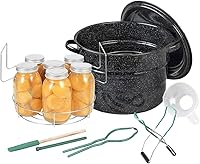
The Granite Ware pot is a 21.5 quart enamelware water bath canner with a rack. Granite Ware says it is not suitable for induction stovetops.
It also cannot pressure can low acid foods because it is a water bath pot.
The All American 915 is the 15.5 quart model in this guide. All American says it is not compatible with induction cooktops.
It also lists gas, electric or flat top stoves.
That leaves a clear buying path for induction owners. You need a different pressure canner that the maker approves for induction, or you need another heat source approved for pressure canning.
Do not use a metal plate or adapter as a workaround unless the canner maker and the cooktop maker both approve that exact setup for pressure canning. We checked the specs for the canners here, and none of them approve induction use.
Our score weighs specs, features and buyer feedback against what you are shopping for. On this site, a canner that cannot use your cooktop cannot score as a fit for induction, no matter how well it cans on other heat.
Rule: if the maker says no to induction, treat that canner as off limits for induction.
How much capacity do you need for a pressure canner?
Capacity should match the batches you actually process. Buy for your normal batch size, not for a rare harvest you may never repeat.
The All American 921 holds up to 18 pint jars or 7 one-quart jars. That suits readers who process large batches of meat, vegetables, seafood or fruit in one run.
It also works as a pressure cooker for everyday cooking.
The All American 915 holds up to 10 pint jars or 7 one-quart jars. That suits smaller batches and readers who want a lighter canner to lift.
It still suits USDA approved canning for low acid and high acid foods.
The Granite Ware pot holds 7 one-quart jars, 9 pint jars or 12 half-pint jars on its rack. That load applies to water bath canning only.
It does not make the pot a pressure canner.
Think about jar size, not just jar count. Quart jars take more room and make a full load heavier.
Pint jars let you fill more jars in the same canner, but you still need to manage total weight.
Think about storage too. A 21.5 quart canner with lid and handles needs cabinet or shelf space that a 15.5 quart canner may not need.
Measure the space before you choose.
Compare more capacity options in our best pressure canner pot guide. Use capacity as your second filter, after induction approval.
Is a larger pressure canner always better?
A larger canner is better only if you fill it. A half full large canner wastes heat and lifting effort.
A full smaller canner can finish faster and with less strain.
Large batches also take longer to heat and cool. That time matters when you process meat or seafood and need to stay near the stove.
Choose larger capacity when you have a clear plan for full loads. Choose smaller capacity when your batches are small or your lifting strength is limited.
Rule: pick the smallest canner that holds your normal full batch.
What should you check about induction burner size?
Burner size can decide whether a canner heats well. The burner should cover enough of the base to heat it evenly.
A small burner under a wide canner can leave the edges cooler.
That matters for pressure canning because pressure depends on steady heat. If the center heats fast and the edges lag, the canner may struggle to build pressure in a stable way.
Induction burners also cycle to control heat. A poor match can cause more cycling.
More cycling can make it harder to hold the target pressure without constant adjustments.
Measure your largest induction burner and compare it with the canner base. Then check the maker guidance for that canner on induction.
Do not guess from the canner diameter alone.
Also check cooktop clearance. A tall pressure canner needs room under cabinets and range hoods.
Leave space to lift the lid safely and to check the gauge or weight.
Height matters when you add a rack and jars inside. The lid must close without pressing on jars.
The canner must still sit flat on the burner with the full load inside.
If your burner is small, a smaller canner may suit you better. If your burner is large, you still need maker approval for induction before you buy.
Rule: match burner size to the base, and confirm that match with the maker.
How does a pressure canner hold pressure safely?
Pressure control is the core safety job. A canner needs a clear way to show pressure and a clear way to vent steam.
The All American models use a pressure gauge and a regulator weight for pressure control. They also use an overpressure plug.
All American says the metal to metal seal gives a steam tight seal without a gasket.
The 921 has positive action clamping wing nuts that lock the cover in place. You align the cover, tighten the clamps, and check the gauge and regulator as you process.
That design appeals to readers who want no gasket to replace.
The 915 uses the same metal to metal sealing system. It includes 2 canning racks, a phenolic handle and a recipe and instruction book.
That helps a new canner start with the basics in one box.
No gasket does not mean no care. You still need to wipe sealing surfaces, check vents, and check the gauge and regulator as the maker directs.
A clean vent path helps steam leave in a controlled way.
If you own a gasketed canner, plan for gasket checks and replacement as the maker directs. Our best replacement gasket for pressure canner guide helps you compare that upkeep task.
Rule: choose pressure control you can read, vent and maintain with confidence.
Which All American size fits your kitchen and lifting limit?
The 921 is 21.5 quarts and weighs 22 pounds empty. That weight rises fast when you add water, racks and jars.
Plan for two hands and a stable path to the stove.
The 921 measures 12.25 inches by 12.25 inches by 15.38 inches. It is cast aluminum with reinforced edges and a phenolic handle.
All American says it is made in the USA in Wisconsin from heavy duty aluminum.
The 915 is 15.5 quarts and weighs 15 pounds empty. It measures 12.25 inches by 12.25 inches by 12.25 inches.
It is lighter and shorter, which helps with lifting and storage.
Both models function as pressure cookers as well as canners. That dual use can help if you want one large pot for beans, stews and canning batches.
Both models suit home preservation with the USDA recommended method. All American says they preserve meats, vegetables, seafood and fruits.
Use tested recipes and times for the food you plan to can.
Neither model solves your induction problem. Both are listed for gas, electric or flat top stoves, and All American says they are not compatible with induction cooktops.
Rule: choose the 915 for lighter lifting, choose the 921 for larger full batches.
When does a water bath canner make sense instead?
A water bath canner makes sense for high acid foods. It does not replace a pressure canner for low acid foods.
The Granite Ware pot is a 21.5 quart enamelware water bath canner with a rack and an 8 piece set. The set includes a jar rack, a bubble remover and ruler, a jar lifter, a magnetic lid lifter, a jar wrench and a jar funnel.
The rack holds 7 one-quart jars, 9 pint jars or 12 half-pint jars. That helps you space jars for water circulation during a water bath process.
The toolset helps you fill, de-bubble, seal and lift jars with less mess.
Granite Ware says the pot is not suitable for glass cooktops or induction stovetops. So this pot also fails the induction test in this guide.
It is a water bath option for approved heat sources, not an induction pressure canner.
Use a water bath pot for tested high acid recipes. Use a pressure canner for meats, vegetables, seafood and other low acid foods.
Do not swap one for the other to save time.
If you need a water bath setup for a glass top, compare our water bath canner for glass top stove guide. If you need a steam canner instead, see our steam canner for canning guide.
Rule: use water bath for high acid foods only, and keep it off induction unless the maker approves it.
What setup do you need beyond the canner?
A canner is only one part of the setup. You need jars, lids, bands, tools and tested recipes before you start.
For pressure canning, plan for pint or quart jars based on your food and recipe. Plan for new lids as your recipe directs.
Keep bands in good shape and free of rust that could affect the seal.
Tools help you work with hot jars safely. A jar lifter, funnel, bubble remover, lid lifter and band wrench reduce spills and burns.
The Granite Ware set shows how those tools fit a water bath setup.
Recipes matter more than gear. Use tested canning recipes and follow processing times and pressures for your food, jar size and altitude.
Do not adjust times on your own.
Pretreat food only as the recipe directs. Pack jars as directed.
Leave the headspace the recipe calls for. Wipe jar rims before you add lids.
Work in a clean area with enough counter space for hot jars. Keep kids and pets out of the lift path.
Set a stable cooling surface before you start processing.
If you plan to learn a specific brand, read how to use a presto pressure canner for brand specific steps. For a broader brand comparison, read best presto pressure canner and cooker.
Rule: buy the full setup and the tested recipe before you buy extra capacity.
How should you set up and care for a pressure canner?
Set up starts with a clean canner and clean sealing surfaces. Follow the maker steps for venting, pressure control and cool down every time.
For the All American models, align the cover and tighten the clamping locks as directed. Use the gauge and regulator weight to watch pressure.
Wipe the satin finish clean after use and check vents and gauge as directed.
For a gasketed canner, check the gasket and sealing rim before each batch. Replace parts as the maker directs.
Store the canner clean and dry, with the lid handled so the seal stays in good shape.
Use the racks the maker calls for. Racks keep jars off the bottom and help heat circulate.
Do not stack jars or let jars touch the sides in a way the maker forbids.
Keep the burner centered under the canner. Avoid sliding a loaded canner across the cooktop.
Lift with two hands and set it down on a stable surface.
After processing, let pressure drop on its own as directed. Do not force cool the canner unless the maker says to do so.
Remove jars with a lifter and set them on a towel or rack to cool.
If induction is your only heat source, do not force a non compatible canner into service. Shop for a pressure canner for induction cooktop that the maker approves for induction, then match burner size, capacity and weight to your kitchen.
If glass top is your concern, compare our best pressure canner for glass top stove guide. That guide covers weight and base checks for a different cooktop type.
Rule: follow the maker steps for your exact canner, and keep induction use to approved models only.
Frequently asked questions
Can I use a pressure canner for induction cooktop if it works on electric?
No, electric and induction are not the same check. A canner for electric or flat top use may have a base that induction cannot heat.
Look for clear induction approval from the maker and a flat base that sits flush on the burner.
What base material works with an induction compatible pressure canner?
An induction compatible pressure canner needs a magnetic base that the cooktop can detect and heat. Aluminum alone may not respond.
Check the maker statement for induction use, not just flat bottom shape, before you rely on a canner at pressure.
What size pressure canner should a beginner choose?
Start with capacity for your normal batch, not your largest dream batch. A 15.5 quart canner holds up to 10 pint jars or 7 one-quart jars.
A 21.5 quart canner holds up to 18 pint jars or 7 one-quart jars, but it is heavier and harder to handle.
Can a water bath canner replace a pressure canner for meats?
No, a water bath canner is for high acid foods. Low acid foods such as meats, vegetables and seafood need pressure canning with the USDA recommended method.
Use a water bath pot only for foods that suit water bath processing.