Canning Jars with Glass Lids: How to Choose
Canning jars with glass lids are chosen by closure type, not by the glass alone: clamp, screw and bail tops each seal in a different way, and only closures made for the method you use will suit water bath or pressure canning. Match the lid, jar and method first, then check mouth size and condition.
On this page (11 sections)
- How do glass lid closure systems seal a jar?
- How do clamp lids work on canning jars with glass lids?
- What should you check before you reuse a glass lid?
- Are wire bail jars suitable for canning?
- How do screw glass lids compare with metal lids?
- What mouth size should you choose for glass lid jars?
- Which glass lid jars suit water bath canning?
- Which glass lid jars suit pressure canning?
- How should you clean and store glass lids?
- When are metal or plastic lids a better choice?
- How do you choose canning jars with glass lids for your kitchen?
Canning jars with glass lids need the right closure for your method. A glass top may look sturdy, yet it seals through a rubber ring, a clamp, a screw band or a wire bail, and each system behaves differently under heat.
Glass resists stains and odors well. That benefit does not make every glass lid safe for canning.
You still need a closure system approved for the food, the jar and the processing method.
If you are new to preserving, start with what do i need for canning so you can see the full set of tools before you choose jars.
How do glass lid closure systems seal a jar?
Glass lid closures seal with pressure on a rubber or silicone ring. Heat, vacuum formation and mechanical pressure hold the ring against the rim.
A clamp lid uses a hinged glass top and a metal clamp that compresses the rubber ring against the glass rim.
A screw lid uses a cap that turns onto threads or a lug finish. The ring inside the cap compresses as you tighten it.
A wire bail lid uses a hinged top and a wire arm locked under a rim knob. That wire sets the sealing pressure.
Each system needs its own ring size and shape. A ring made for one top will not always fit another.
The seal also depends on a clean, smooth rim. A tiny chip or a grain of food can leave a channel that lets air pass.
During processing, air expands and escapes, then contracts as the jar cools and helps pull the seal tight.
That sequence only works when the lid maker designed the closure for processing. A storage lid may seal well in the pantry yet fail when heat builds pressure.
Rule: buy the jar, ring and closure as one approved system for canning.
How do clamp lids work on canning jars with glass lids?
Clamp lids seal with a hinged glass top, a rubber ring and a metal latch. The latch pulls the top down and keeps steady pressure on the ring.
This design lets you see the food through the jar and the top. The glass resists staining from tomato sauce and pickling spices.
The rubber ring sits in a groove on the underside of the glass top and presses against the jar rim. It forms the actual seal.
Check that ring before each use. Cracks, stiffness, odor or a loose fit can weaken the seal.
The clamp itself sets the force. If it is bent, loose or hard to close, the top may not press evenly on the ring.
Glass tops and clamps also need space in the canner. A tall hinge and latch can make a jar wider or taller than a standard mason jar.
That extra size can change how many jars fit in a pot. It can also affect heat flow around the jar during processing.
Some clamp systems are made for canning, while others are made only for dry storage. The maker should state the approved method in clear terms.
Rule: use clamp lids for canning only when the maker approves that jar and ring for your method.
What should you check before you reuse a glass lid?
Reuse a glass lid only when the glass, ring and hinge are all sound. Small flaws in any part can break the seal during processing.
Start with the jar rim. Run a fingertip around it and look for chips, cracks or rough spots.
A damaged rim may not meet the rubber ring evenly.
Check the glass top next. Look for cracks around the hinge, the groove and the edge.
A crack can spread under heat.
Check the rubber ring for tears and loss of stretch. It should sit firmly in the groove and return to shape when pressed.
Smell the ring after washing. A strong odor can mean it has absorbed food smells and may not seal as well.
Check the clamp or bail for bends and weak tension. The closure should open and close with firm resistance, not hang loose.
Keep rings with the tops they fit. Swapping rings between similar lids can lead to a poor seal.
Rule: discard any lid, ring or clamp with a crack, chip, tear or weak tension.
Are wire bail jars suitable for canning?
Wire bail jars can suit canning when the jar, ring and bail are sold as a processing system. The bail design alone does not prove that use.
A wire bail holds a glass top down with even pressure. The rubber ring under the top makes the actual seal.
That pressure must stay stable during heating and cooling. A twisted wire, bent knob or worn ring can change the force on the seal.
Many people buy bail jars for dry goods, gifts and table serving rather than for processing. Their classic pantry look is a major draw.
The shape of the jar matters as well. Some bail jars have shoulders or panels that change heat flow and headspace.
A maker may approve a bail jar for water bath canning but not for pressure canning. Those methods place different demands on the closure.
You also need a tested recipe for the food, jar size and processing time. The lid does not replace that step.
If the maker does not state a canning method, treat the jar as a storage container. That limit protects both food safety and the seal.
Rule: do not process wire bail jars unless the maker approves the full system for that method.
How do screw glass lids compare with metal lids?
Screw glass lids use threads and a sealing ring to close the jar. Metal lids use a flat lid and a separate band to press the sealing compound against the rim.
A glass screw top can be convenient because you can see through it. The top also resists rust, since it has no metal sealing surface.
The seal depends on thread fit and ring condition. Cross threading, a dirty thread or a warped ring can stop a tight seal.
Metal lids have a long record in home canning. Their sealing compound is made to respond to heat and to form a vacuum as the jar cools.
That metal system also uses a band to hold the lid in place. You remove the band after processing and check the seal before storage.
Glass screw tops may need different tightening force. Too loose can leak, while too much force can strain the ring or the threads.
Some glass tops are made for dry storage, refrigeration and freezing. Those uses are common and useful, but they are not the same as canning.
A plastic screw lid can also work well for storage. It will not rust and it often has a silicone gasket for an airtight pantry seal.
Rule: choose a metal lid system for canning unless a glass screw top is approved for that process.
How do storage lids differ from canning lids?
Storage lids aim to stop spills and keep pantry food fresh. Canning lids aim to form a seal during heat processing and cooling.
A storage lid may have a silicone gasket and a tight screw fit. That design works well for soup in the fridge and dry beans in the pantry.
A canning lid has a sealing surface made to work under heat. It also needs a band or closure that holds the lid at the right pressure.
The two types can look alike from above. The difference is in the approved use, not in the color or shape.
Plastic storage lids will not rust or warp. That trait makes them useful for jars that open and close often.
Metal canning lids may rust over time if they get wet. Inspect them before use and replace any with rust or dents.
Rule: label storage lids as storage lids so they are not used for canning by mistake.
What mouth size should you choose for glass lid jars?
Choose mouth size by how you will fill, clean and empty the jar. The opening controls the lid size and the tools that fit inside.
Regular mouth jars suit jams, jellies, pickles and foods that pour or spoon out easily. Their narrower top also matches a common range of lids and rings.
Wide mouth jars suit soups, sauces, vegetables and foods you need to pack by hand. The larger opening makes filling and washing easier.
A wide mouth also helps when you store a spoon or small funnel inside the jar. That can save space in a crowded kitchen.
The trade-off is lid availability. Wide mouth lids and rings cost more per piece in some ranges, and you need the correct size for each jar.
Regular mouth lids are often easier to find in bulk. That matters when you process a large batch and need many lids at once.
Measure the outside of the mouth before you buy spare lids. A small size error can stop a lid from fitting or sealing.
If you want time to compare formats, read our guide to best canning lids wide mouth and best canning lids regular mouth.
Rule: pick regular mouth for pouring foods and wide mouth for packing and cleaning.
Which glass lid jars suit water bath canning?
Water bath canning suits jars approved for that method with a tested recipe. The closure must hold pressure while the food heats and cools.
Start with the jar maker's instructions. They should name the approved lid type, ring type and processing method.
Use the headspace given in a tested recipe. Too much food can push against the lid, while too little can change heat flow.
Place jars in a rack so water can circulate around them. Contact with the pot bottom can create hot spots and uneven processing.
Our guide to best canning rack for stock pot can help you match rack size to your pot.
Leave the closures in the position the maker directs during processing. Changing that position can alter the seal.
After processing, let jars cool without disturbance. Moving a hot jar can break a seal that is still forming.
Check seals after full cooling. A sealed lid should not flex in the center and should hold when you lift the jar by the lid.
Foods processed in a water bath need enough acid for safety. A jar lid cannot make a low-acid food safe for that method.
Rule: use only jar and lid combinations approved for water bath canning with a tested recipe.
Which glass lid jars suit pressure canning?
Pressure canning suits rigid glass jars with closures approved for pressure processing. That approval is stricter than approval for water bath use.
Pressure raises the boiling point of water inside the canner. The jar and closure must hold up under that heat and pressure.
Some glass lid systems are not built for that load. A clamp, bail or screw top may leak or fail if the maker did not design it for pressure canning.
Check the jar maker and lid maker for pressure canning approval. If either source does not approve the pair, do not use them together.
Use jars made for canning rather than decorative glassware. Decorative jars may have thin glass, uneven rims or closures that cannot handle pressure.
Fill jars to the headspace in a tested recipe. Air space helps with expansion and vacuum formation.
Vent the canner as directed before timing the process. The timing starts only after pressure and venting reach the right stage.
Cool jars in a draft-free spot after processing. Check seals once they are fully cool.
Rule: pressure can only jars and closures approved for pressure canning as a matched system.
How should you clean and store glass lids?
Clean glass lids with care that protects the rim, ring and hinge. Harsh handling can damage the parts that make the seal.
Wash glass tops in warm, soapy water. Use a soft sponge so you do not scratch the sealing surface.
Wash rubber rings by hand when possible. Strong scrubbing can tear a ring or wear its edge.
Dry all parts well before you stack jars. Moisture between a lid and rim can leave residue and hide early damage.
Store rings flat and separate from clamps. A bent bail or clamp can press on a ring and change its shape.
Keep glass tops upright or flat, depending on the maker. Avoid stacking heavy pans or tools on top of them.
Inspect lids before each canning season. Look for chips, cracks, stiff rings and loose clamps.
Label each jar with contents and date after processing. That habit helps you use older food first and spot any seal loss.
Rule: store glass lids dry, clean and separate from tools that can chip or bend them.
When are metal or plastic lids a better choice?
Metal or plastic lids suit many needs better than glass lids. The best choice depends on whether you will can, refrigerate, freeze or store dry food.
Metal canning lids are the standard for processing. Their sealing compound and band system work with tested recipes and common canners.
Plastic lids are strong for storage. They will not rust, they often have a silicone gasket, and they can go in a dishwasher or freezer as the maker directs.
The Masontops Tough Tops are an example of a plastic storage lid. They are white, BPA-free plastic screw lids for Ball wide mouth mason jars, and the jars are not included.
Their faceted sides give you a grip for opening and closing. The silicone gasket helps make a leakproof seal for liquids and dry goods.
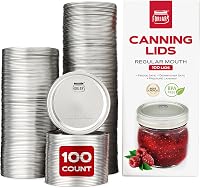
FORJARS also makes metal lids in regular mouth and wide mouth sizes. Each pack in this guide holds 100 lids with silicone seals.
Those FORJARS lids use food-grade metal and are made for Ball jars in the matching mouth size. They suit canning and long storage when used as directed.
If you want a broader view of lid types, see best canning lids and rings. You can also compare finishes in canning jars with black lids.
Color can also matter for display. Our guide to colored ball canning jars explains when tinted glass helps or limits your view.
Rule: use metal lids for canning, plastic lids for storage, and glass lids only when approved.
How do you choose canning jars with glass lids for your kitchen?
Choose canning jars with glass lids by method, mouth size, closure design and condition. The right jar is the one that fits your food and your canner.
First, name the method you will use. Water bath, pressure canning, refrigeration and dry storage each need a different lid.
Second, match mouth size to the food. Wide mouth works well for packing, while regular mouth works well for pouring and spooning.
Third, read the maker on the full system. The jar, ring, clamp, bail or screw top should be approved together for that use.
Fourth, check fit in your canner. Tall hinges, wide clamps and large lids can change jar count and water flow.
Fifth, inspect each part before you buy. Chips, cracks and worn rings can ruin a batch even when the glass looks clear.
Sixth, plan spares. Extra rings and lids let you replace a worn part without changing the whole jar.
If you want a starter set, compare best canning starter kit options before you buy jars on their own.
We compared specs and features for the products above. We looked at mouth size, lid material, seal type and pack count so you can match each option to a real use.
Rule: buy glass lid jars only when the full closure system is approved for your method and fits your canner.
Frequently asked questions
Can you use glass lids for canning jars in a water bath?
You can use glass lids only when the jar maker and lid maker approve that exact combination for water bath canning. Check the closure instructions, inspect the rubber seal, and follow tested processing times for your food and jar size.
Are canning jars with glass lids the same as mason jars?
Many canning jars with glass lids are mason jars, but the term also covers jars with clamp, wire bail or screw glass tops. The glass body may look similar while the sealing method and approved uses differ greatly.
What is the difference between regular mouth and wide mouth jars?
Regular mouth jars have a narrower opening, while wide mouth jars give more room for filling, cleaning and removing food. The mouth size controls which lids, rings and funnels fit, so measure the opening before you buy replacements.
Can plastic lids replace glass lids for canning?
Plastic lids can suit dry storage, refrigeration and freezing, but most are not made for heat processing. Use a lid approved for water bath or pressure canning when you plan to process jars, and keep storage lids for pantry and fridge use.
Why do glass lid seals fail during canning?
Seals fail when the rim is chipped, the rubber ring is worn, food residue sits on the rim, or the closure pressure is wrong. Clean rims carefully, inspect each seal, and discard any jar or lid with damage before processing.