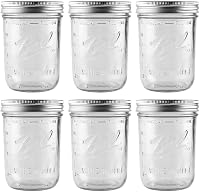
Large Canning Jars: Which Size Should You Choose?
Extra large canning jars suit storage and a few canning tasks, not most water bath canning: pick half gallon jars for pantry storage, pickles and dried goods, and pick quart or pint jars when a tested canning recipe calls for them.
On this page (12 sections)
- Extra large canning jars: what counts as extra large?
- Can you can food in half gallon canning jars?
- Canning jars half gallon vs quart jars: which should you choose?
- Half gallon canning jars wide mouth: when is a wide mouth worth it?
- Wide mouth canning jars half gallon for pickles and dry goods
- How tall are extra large canning jars and how much shelf space do you need?
- Which foods suit extra large jars, and which foods do not?
- Glass lids, metal lids and bands: what should you look for?
- How do you clean, fill and store large canning jars?
- Extra large canning jars vs quart and pint jars: the trade offs
- How to choose extra large canning jars for your kitchen
- Final decision rule for extra large canning jars
Extra large canning jars suit pantry storage and a limited set of canning tasks, not most water bath canning. A half gallon jar holds about 64 fluid ounces, so it stores twice as much as a quart jar.
That extra room helps with pickles, dried goods and bulk dry storage, while tested recipes for jams, sauces and low acid foods often call for smaller jars.
You should start with the food you plan to store, not with the biggest jar you can find. Check a tested recipe first if you plan to process food in a water bath or pressure canner.
Then compare jar height, mouth width, lid type and shelf space.
We compared jar sizes by capacity, mouth style and common kitchen use. We checked the specs for the three products in this guide and looked at how each size behaves in daily use.
Our score weighs specs, features and buyer feedback against what you are shopping for.
If you are new to canning, start with our guide to what do i need for canning so you buy lids, bands and a canner that match your jar size.
Extra large canning jars: what counts as extra large?
Extra large usually means half gallon capacity, about 64 fluid ounces. That size is larger than a quart jar at 32 fluid ounces and much larger than a pint at 16 fluid ounces.
It is also larger than a 1 liter jar, which holds about 34 fluid ounces.
You will also see half gallon jars sold as wide mouth or regular mouth. Wide mouth jars have a broader opening, so you can pack food in and wash them out more easily.
Regular mouth jars have a narrower opening, which can work well for liquids and purées that pour through a funnel.
Extra large jars take more shelf height than quarts and pints. Measure your pantry shelves before you buy a set.
A jar that fits on a shelf when empty can be hard to lift out when it is full of beans, pickles or liquid.
Rule: buy extra large jars for storage first, then check each canning recipe for its exact jar size.
Can you can food in half gallon canning jars?
You can can only the foods and recipes that name half gallon jars. Most tested water bath and pressure canning recipes use quarts, pints or half pints.
If a recipe does not name a half gallon jar, do not assume the larger size is safe.
Heat penetration changes with jar size. A half gallon jar heats more slowly in the center than a quart jar.
That is why processing times are tied to a specific jar size in tested recipes.
Dry storage is different from canning. You can store dried beans, rice, flour and snacks in extra large jars with airtight lids.
That use does not require a canner, and it does not promise the same shelf life as a properly processed canned food.
Check the best mason jars for canning page if you want more detail on standard mason jar sizes before you commit to a large set.
Rule: if the recipe does not name the jar size, do not use that jar for canning.
Canning jars half gallon vs quart jars: which should you choose?
Choose quart jars for most canning and half gallon jars for bulk storage. A quart jar fits the widest range of tested recipes.
A half gallon jar reduces the number of containers you need to wash and store, but it is heavier and harder to handle when full.
Quart jars suit soups, tomatoes, vegetables and fruits in tested recipes. Half gallon jars suit pickles that sit in brine, dried pulses, grains and foods you use in large amounts at home.
They also suit sourdough starter and other kitchen projects that need headroom.
Storage space matters in both directions. Half gallon jars use fewer shelves for the same total volume, but each jar needs more vertical space.
Quart jars stack more easily in a pantry and are easier to pass from shelf to counter.
Compare options in our best quart canning jars guide if your main goal is canning rather than dry storage.
Rule: pick quarts for canning range, and half gallon jars for storage volume.
Half gallon canning jars wide mouth: when is a wide mouth worth it?
A wide mouth is worth it for packing, scooping and washing large jars. You can fit a hand, a wide funnel or a ladle into a wide mouth half gallon jar.
That helps with pickles, dried beans, pasta, rice and other foods that do not pour easily.
Wide mouth jars also make it easier to remove food. You can lift out pickles or dried fruit without bending the pieces through a narrow neck.
That matters more in a half gallon jar, where the food sits deeper from the opening.
Wide mouth lids and bands are a separate purchase to track. Make sure replacement lids match the mouth size of your jars.
A lid that fits a quart jar may not fit a half gallon wide mouth jar.
Our best ball canning jars guide covers one common mason jar brand in more detail, including how lid styles fit different jar sizes.
Rule: choose wide mouth for solid and bulky foods, and regular mouth for liquids and purées.
Wide mouth canning jars half gallon for pickles and dry goods
Wide mouth half gallon jars work well for pickles, dry goods and bulk pantry storage. You can pack cucumber slices, green beans and peppers in without forcing them through a small opening.
You can also fill the jar in layers and adjust the brine level as you go.
Dry goods benefit from the same access. You can add beans, rice or oats with a scoop, then close the lid without leaving a trail of dust on the rim.
A clean rim helps the lid seal well for storage.
Pickles have a caution in large jars. Brine and food must follow a tested recipe and packing method for the jar size you use.
If no tested half gallon pickle recipe fits your food, use quart or pint jars for canning and save the large jar for storage.
Rule: use wide mouth half gallon jars for pickles only with a tested recipe for that size.
How tall are extra large canning jars and how much shelf space do you need?
Half gallon jars are usually about 8 to 10 inches tall, so measure your shelves first. Exact height varies by brand and mouth style.
A quart jar is shorter, and a pint jar is shorter still, so moving up in size changes the shelf layout.
Measure the inside height of each shelf, including the shelf above it. Then measure the jar with its lid and band in place.
You need room to lift the jar out without knocking the shelf above, especially when the jar is full and heavy.
Weight is the other limit. A half gallon jar full of liquid can weigh several pounds.
If you store jars at eye level or above, quart jars may be safer to handle. Keep heavy half gallon jars on low shelves.
Look at our best pint-canning-jars guide if you want smaller jars that are easier to lift, store and give away.
Rule: measure shelf height with the lid on, and store full half gallon jars low.
Which foods suit extra large jars, and which foods do not?
Extra large jars suit bulk dry goods, pickles, sourdough starter and foods you use quickly. Dried beans, rice, flour, pasta, oats, nuts and spices all store well in large glass jars with airtight lids.
You can see the contents, label the jar and scoop out what you need.
Juice, pickled vegetables and pulses are listed uses for the 1 liter Weck jar in this guide. That jar has a wide mouth, a glass lid, a rubber gasket and stainless steel clips.
The separate pieces make washing easier, and the wide opening helps with pouring.
Small foods suit small jars better. Jams, jellies, herbs and spices keep fresher in smaller amounts that you finish before the contents lose quality.
A half gallon jar of jam can sit open for a long time if you use it slowly.
Rule: match jar size to how fast you will use the food after opening.
Glass lids, metal lids and bands: what should you look for?
Choose lids that match your jar mouth size and your plan for storage or canning. Standard mason jars use two piece metal lids with a flat lid and a screw band.
Weck jars use a glass lid with a rubber gasket and clips.
Each system works, but parts are not interchangeable.
Metal lids are common for canning because tested recipes are written around them. You press the flat lid onto the jar, add the band and process the jar as directed.
After processing, you remove the band and check the seal.
Glass lids suit storage and some canning methods that call for that system. The Weck jar in this guide comes with a glass lid, rubber gaskets and stainless steel clips.
That design creates an airtight seal for storage of juice, pickled vegetables and pulses.
Read our guide to canning jars with glass lids if you want to compare that lid style with standard metal lids before you buy.
Rule: buy lids and bands that match the jar brand and mouth size, not just the capacity.
How do you clean, fill and store large canning jars?
Wash large jars by hand or in the dishwasher, fill them without forcing food through a small opening, and store them where you can lift them safely. Wide mouth jars are easier to wash by hand because you can reach the bottom and sides.
Dishwasher safe glass still needs clean rims before you add lids.
Fill dry goods in layers and tap the jar gently to settle the contents. That leaves fewer air gaps and makes it easier to add more food.
For pickles and liquids, follow the headspace in your tested recipe and wipe the rim before adding the lid.
Label each jar with the contents and the date you filled it. Dry goods and stored foods do not last forever, even in glass.
Use older jars first and check for chips, cracks or worn rims before you reuse a jar.
Small quantities need a different approach. Our best small canning jars guide covers sizes that work well for gifts, jams and single servings.
Rule: label every large jar with contents and date, and check the rim before each use.
Extra large canning jars vs quart and pint jars: the trade offs
Extra large jars win on storage volume, while quart and pint jars win on canning options and handling. A half gallon jar holds about twice a quart and four times a pint.
That means fewer jars to wash, label and store for the same amount of food.
The trade off is weight and recipe range. A full half gallon jar is harder to lift, pour and move into a canner.
Quart and pint jars fit more tested recipes, so you can can a wider range of foods with one set of jars.
Shelf space cuts both ways. Fewer large jars can look tidy on a shelf, but they need more height.
More small jars need more shelf area, but each jar is easier to reach and remove.
Rule: buy extra large jars as storage jars, and keep quart and pint jars as your main canning set.
How to choose extra large canning jars for your kitchen
Choose extra large canning jars by food use, mouth width, lid type and shelf height, in that order. Start with the foods you will store most often and how fast you will use them.
Then check the mouth size, the lid system and the space where the jars will live.
If you plan to can food, check tested recipes before you buy. That step alone will tell you whether half gallon, quart or pint jars fit your goals.
If you plan to store dry goods, focus on airtight lids, wide mouths and glass that is easy to wash.
Count how many jars you need for your peak storage week, not for a vague future plan. A 1 liter jar can handle sourdough starter and bulk storage without the height of a half gallon jar.
An 8 oz jar can handle jam and honey in smaller portions that you finish quickly.
Rule: buy the smallest jar that still holds your normal load, and add a larger size only for a named need.
Final decision rule for extra large canning jars
Pick half gallon wide mouth jars for bulk storage, quart jars for most canning, and pint or half pint jars for jams and small portions. That mix covers storage, canning and daily use without forcing every food into the largest jar.
Use extra large jars for dried beans, grains, pasta and pickles that fit a tested recipe or a storage plan. Use quart jars for tomatoes, vegetables, fruits and sauces in tested recipes.
Use 8 oz and 16 oz jars for jam, honey, spices and foods you will finish in a short time.
Measure your shelves, check your recipes and match the lid system to the jar. Then buy a starter set that fits the foods you already cook and store.
That approach keeps extra large canning jars useful instead of oversized.
Frequently asked questions
Are half gallon canning jars safe for water bath canning?
Half gallon jars are not the size used in most tested water bath recipes. Use a tested recipe that names the jar size, and use quart or pint jars for common water bath foods.
Half gallon jars work well for dry storage and some pickling methods.
What is the difference between half gallon and quart canning jars?
A half gallon holds about 64 fluid ounces, while a quart holds 32 fluid ounces. That makes the half gallon about twice as tall and twice as heavy when full.
The larger size suits bulk storage, while the quart fits more tested canning recipes.
Do wide mouth canning jars half gallon work better than regular mouth?
Wide mouth jars are easier to fill, pack and wash, especially for pickles, dried beans and large pieces of food. Regular mouth jars can suit liquids and jams where a funnel works well.
Choose the mouth you can fill and clean without stressing the rim.
Can I use extra large canning jars for pressure canning?
Use only jar sizes named in a tested pressure canning recipe for the food you plan to process. Many recipes call for quarts or pints, so check the recipe before you buy extra large jars.
Follow the processing time and headspace for that exact jar size.