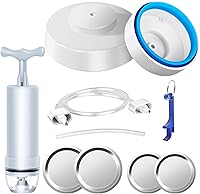
How to Use a Vacuum Sealer Pump
To use a vacuum sealer pump, attach its hose to a compatible food-storage valve, pump out the air, then remove the hose and close the valve. Check the valve and container instructions first, because separate pumps do not fit every bag or container.
On this page (11 sections)
- What is a vacuum sealer pump?
- How do you use a vacuum sealer pump?
- How do you use a vacuum sealer pump with a container?
- How do you use a vacuum sealer machine with a hose?
- What should you check before pumping?
- Can you use heat-seal rolls with a vacuum sealer pump?
- What is the difference between a pump and a countertop sealer?
- How do you prevent air from returning?
- How should you clean and store a vacuum sealer pump?
- What is the safest way to store vacuum-sealed food?
- How do you choose the right vacuum sealer pump setup?
To use a vacuum sealer pump, connect it to a compatible food-storage valve, remove air until the container or bag draws tight, then detach the hose and close the valve. The pump, hose, valve, and storage item must be designed to work together.
A separate pump is useful for valve-based bags, containers, and jars that are made for vacuum storage. It is different from a countertop heat-seal machine, which pulls air through a bag opening and closes the opening with heat.
What is a vacuum sealer pump?
A vacuum sealer pump is a handheld tool that removes air through a valve in a compatible food-storage item. It does not create a heat seal unless the storage system includes a separate sealing step.
Some pumps are manual, while others use a powered motor. The key detail is the connection system.
A hose or pump nozzle must form a good fit with the valve, or air will keep entering instead of leaving.
If you're new to this type of storage, What Exactly Is a Handheld Suction Sealer? explains how compact suction devices differ from larger machines.
How do you use a vacuum sealer pump?
Attach, pump, check, and close is the basic process. Keep the valve and the area around it clean and dry so the pump can draw air properly.
- Fill the compatible bag or container without blocking the valve.
- Leave enough space around the opening for the valve or lid to close correctly.
- Check the valve, hose, and pump nozzle for food, moisture, or visible damage.
- Place the pump firmly over the valve.
- Pump until the bag or container draws inward and the system instructions say to stop.
- Remove the pump without pulling the valve loose.
- Close or lock the valve, then check whether air returns.
Do not overfill the storage item. A crowded container can prevent the lid from sitting flat, while food near a valve can interfere with air removal.
How to use a vacuum sealer pump with a food bag
To use a vacuum sealer pump with a bag, fill the bag below the valve line, smooth the bag, and connect the pump to the valve. Pump slowly enough to watch the bag and stop if food, liquid, or the bag itself moves toward the valve.
Valve bags need a different setup from heat-seal rolls. For a comparison of the two approaches, see What Exactly Is a Suction Vacuum Sealer?.
Keep sharp bones and hard edges away from the valve and bag surface. A puncture can let air back in even when the valve appears closed.
How do you use a vacuum sealer pump with a container?
Place food in a compatible container, fit the lid correctly, and attach the pump to the lid valve. Leave enough room for the lid to close without pressing against the food.
Wipe the rim before closing the lid. Crumbs, grease, or moisture can stop the lid gasket from making an even contact.
Pump until the container shows the system's normal vacuum condition. Then remove the hose gently and close the valve cap.
Lift the lid only after releasing the vacuum according to the container instructions.
A container is often easier for soft foods or foods that could be crushed in a flexible bag. It also avoids cutting a new bag for every storage session, but the container must match the pump system.
How do you use a vacuum sealer machine with a hose?
A machine with an accessory hose can remove air from compatible containers or accessories through a valve. Connect the hose to the machine's accessory port and the other end to the compatible valve, then select the machine's accessory function if it has one.
The FoodSaver FM2100 Vacuum Sealer Machine includes an accessory port and hose, plus one 11 x 10 ft vacuum seal roll, three 1-quart pre-cut bags, and two 1-gallon pre-cut bags. Its one-touch system also handles dry and moist food in compatible heat-seal bags.
The FM2100 measures 16.3 x 9.2 x 4 in and weighs 6.6 lb. Its built-in roll cutter can help you make bags to fit different portions, while the dual heat sealing strips create the bag seal.
Choose it if you want one appliance for heat-sealing bags and hose-based accessory use. A separate handheld pump may be more practical if you only use valve containers and do not need heat-sealed bags.
What should you check before pumping?
Check compatibility, valve condition, fill level, and food placement before starting. These four checks prevent many weak vacuums and failed seals.
The pump nozzle should sit squarely over the valve. If you need to hold it at an angle to maintain contact, the hose or pump may not match that system.
Keep liquids below the valve and leave room around the opening. If liquid reaches the pump, stop and follow the pump or storage system care instructions.
For a wider look at pump choices, compare the best vacuum sealer pump options before buying a replacement or second system.
Can you use heat-seal rolls with a vacuum sealer pump?
No, not by themselves. Heat-seal rolls have open ends that need a compatible vacuum sealer machine to remove air and close the opening with heat.
The FoodSaver Custom Fit Vacuum Sealer Rolls are 11 x 16 ft rolls sold in a 3-pack. They are BPA-free, reusable, and designed for FoodSaver vacuum sealing systems.
These rolls suit people who want to cut bags to match different food portions. They are freezer, refrigerator, microwave, and boil safe according to the product information, but they still require a compatible heat-seal process.
Choose rolls when you want custom bag lengths. Choose valve bags or containers when you want to use a separate pump without creating a heat seal.
What is the difference between a pump and a countertop sealer?
A pump uses a valve, while a countertop sealer pulls air from a bag opening and seals that opening with heat. The right choice depends on the storage items you already use and whether you need custom bag lengths.
A countertop machine may suit bulk storage, leftovers, or bags that need a continuous heat seal. A handheld pump may suit containers and valve bags that are opened and resealed often.
What Exactly Is a Countertop Vacuum Sealer? covers the larger machine style and its typical setup. If you are comparing a pump with another FoodSaver method, read how to use zwilling vacuum sealer for a separate valve-based workflow.
The Nesco Deluxe Food VS-12 Vacuum Sealer is a 130-watt corded electric machine with dry, moist, double-seal, normal, and gentle vacuum settings. It includes an 8.6 x 9.85 ft roll and an 11.8 x 9.85 ft roll.
The VS-12 has built-in roll storage, a sliding bag cutter, and a viewing window. Its compact body measures 15.75 x 8 x 4.5 in and weighs 6 lb.
Choose it if you want adjustable vacuum settings for dry or moist foods and custom-size heat-seal bags. It is not a substitute for a separate valve pump when your storage system requires a handheld connection.
How do you prevent air from returning?
Close the valve immediately and inspect the storage item if the vacuum weakens. Air can return through a loose valve, a dirty contact area, a puncture, or an opening that was not closed correctly.
For a container, check the lid rim and gasket area. For a bag, look for sharp food edges, wrinkles near the valve, or a damaged surface.
Do not keep pumping indefinitely to compensate for a poor connection. Remove the pump, inspect the parts, and reconnect only after correcting the problem.
For another system-specific comparison, see the Zwilling vacuum sealer review. Different systems use different valves, bags, and connection points.
How should you clean and store a vacuum sealer pump?
Disconnect the pump, wipe accessible surfaces, and store the hose without sharp bends. Follow the pump and storage system instructions for any removable parts or cleaning limits.
Keep the nozzle and hose dry before storage. Do not place a wet hose into a closed cabinet, and do not let food residue remain around a valve connection.
Store compatible bags and containers where valves will not be crushed. Replace a bag, hose, or valve that has a visible puncture, split, or damaged connection.
What is the safest way to store vacuum-sealed food?
Vacuum sealing is a storage method, not a replacement for safe chilling, cooking, or temperature control. Keep perishable food refrigerated or frozen as appropriate, and follow USDA food safety guidance.
Label bags and containers with the food and storage date. Cool cooked food safely before sealing, and avoid leaving perishable food at room temperature while setting up the pump.
How do you choose the right vacuum sealer pump setup?
For how to use a vacuum sealer pump, first match the pump to the valve system, then choose between flexible bags, reusable containers, and a countertop heat-seal machine.
Choose the FoodSaver FM2100 if you want a machine with an accessory hose plus dry and moist heat-sealing. Choose the FoodSaver rolls if you already have a compatible FoodSaver system and want custom bag lengths.
Choose the Nesco VS-12 if you want a corded countertop machine with gentle, moist, and double-seal settings.
A separate pump is best when your storage items already have compatible valves. A countertop machine is better when you need heat-sealed bags made from rolls or pre-cut bags.
Frequently asked questions
How do you use a vacuum sealer pump?
Attach the pump hose to a compatible valve on a food container, bag, or storage system. Pump until the air is removed according to the system instructions, then detach the hose and close the valve.
Check the seal before storing food.
Can you use any vacuum pump with any bag?
No. Vacuum pumps and bags need compatible valves or openings, and many separate pumps are designed for specific food-storage systems.
Match the pump, hose, valve, and container before use.
A heat-seal machine uses a different process from a valve-based handheld pump.
How do you know when a vacuum bag is sealed?
A valve-based bag should feel drawn inward after pumping, with the valve closed securely. A heat-sealed bag should have a continuous seal across the opening.
If air returns quickly, inspect the valve, bag surface, and seal for food, moisture, wrinkles, or damage.
Is a vacuum sealer pump the same as a vacuum sealer machine?
No. A separate pump removes air through a compatible valve, while a heat-seal machine removes air and seals a specially made bag with heat.
Some machines also include an accessory hose for compatible containers or accessories.