How to Use a Vacuum Sealer for Marinades
To use a vacuum sealer for marinade, put food and marinade in a bag, remove air in small pulses, and seal before liquid reaches the seal strip. For very wet mixes, freeze the bag flat first or use a container method so the sealer does not suck marinade into the chamber.
On this page (10 sections)
- Is it safe to seal meat that is already in marinade?
- How to use a vacuum sealer for marinade in a bag
- How does the container method prevent spills?
- Should you freeze the bag before sealing?
- Which sealer features help most with wet marinades?
- How do you clean the sealer after sealing marinade?
- How do you store and use marinated food after sealing?
- What are the most common marinade sealing mistakes?
- Which vacuum sealer should you pick for this job?
- Final tips for sealing marinade without spills
To use a vacuum sealer for marinade, put food and marinade in a bag, remove air in small pulses, and seal before liquid reaches the seal strip. For very wet mixes, freeze the bag flat first or use a container method so the sealer does not suck marinade into the chamber.
This works because the sealer pulls air out through the open end of the bag. Liquid can travel faster than air, so the goal is to control flow and keep the sealing area dry.
Is it safe to seal meat that is already in marinade?
Yes, but only if the food stays cold and you store it in the refrigerator for a short time. Vacuum sealing does not make raw meat safe at room temperature.
Raw chicken, beef, pork, and seafood should stay at 40°F or below until cooking. Most home marinades last for hours, not days, unless a recipe gives a longer time for that cut and temperature.
Do not reuse marinade that touched raw meat unless you boil it. When in doubt, make extra marinade and use fresh liquid for basting or sauce.
If you want a general starting point, our guide to How Do You Use a Vacuum Sealer for Beginners? explains the basic steps before you add liquid to the bag.
How to use a vacuum sealer for marinade in a bag
Add food and marinade to a bag, leave space at the top, and seal with the bag held upright. Keep the open end flat in the machine with no liquid on the seal strip.
Choose a bag several inches longer than the food so you can lift it and stop the vacuum before marinade reaches the seal. Put food in first, then add only enough marinade to coat it.
Squeeze out extra air by hand, insert the open end, and watch closely. Stop as soon as the bag pulls tight, seal right away, and wipe any splashes from the outside.
How to seal a wet bag without pulling in liquid
Use the wet or moist food setting if your machine has one. It shortens vacuum time and helps the seal form before liquid climbs into the chamber.
Hold the bag at a slight angle so liquid stays near the food and away from the opening. Keep the bag mouth level in the machine, not sagging into the drip area.
Pulse the vacuum for a second or two, pause, and check the liquid level. Repeat until most air is out, then seal while the bag is still loose enough to control.
If liquid reaches the seal strip, cancel the cycle and clean the strip. A damp strip can cause a weak seal that only shows up later.
What if your machine has no wet setting?
Use short pulses and manual control instead of a full automatic cycle. Many external sealers let you press and release the vacuum button to remove air in stages.
A machine with separate air pulse and seal functions makes this easier. The Anova Culinary Vacuum Sealer has separate air pulse and seal functions, and it comes with 10 pre-cut bags.
Keep one hand on the bag and one on the controls. Stop early, press seal, and accept a little extra air if that keeps the seal clean.
How does the container method prevent spills?
The container method keeps marinade in a rigid tub while the sealer removes air from the headspace. No liquid travels through the machine, so the seal strip stays dry.
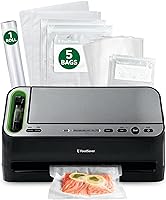
Use a container that fits the food without filling it to the top. The FoodSaver V4400 works with FreshSaver containers and zipper bags, plus its handheld retractable sealer can handle containers and canisters.
Fill the container with food, add marinade until coated, and leave at least 1 inch of space at the top. Close the lid, connect the hose or handheld sealer, and remove air.
This suits soups, pickles in brine, and tomato sauces where a bag would spill. It also helps with acidic marinades that can splash or foam.
The trade-off is bulk. Containers take more refrigerator space than flat bags, and some marinades need stirring to coat evenly.
Should you freeze the bag before sealing?
Freezing a filled bag flat for 30 to 60 minutes can make sealing much cleaner. The marinade firms up, so it stays put while the machine removes air.
Lay the bag flat on a tray with the open end at the edge. Freeze until the liquid is slushy or firm, not necessarily rock solid.
Return the bag to the sealer and remove air in short pulses. The frozen surface helps keep liquid away from the seal strip and chamber.
This works best for oil and water mixes, citrus juices, and wine-based marinades. It is less useful for thick sauces that already stay in place.
Label the bag before freezing. Write the food, marinade, and date so you can use it before quality drops.
Which sealer features help most with wet marinades?
Automatic moisture detection, a removable drip tray, and manual pulse control help most. They deal with the exact problem liquid creates during sealing.
The FoodSaver V4400 has automatic moisture detection that switches to the correct mode, plus a removable drip tray that is dishwasher safe. It also has built-in roll storage and a cutter for custom bag sizes.
The FoodSaver FM2100 is built for dry and moist food, with dual heat sealing strips and roll storage and a cutter. It includes an 11 inch by 10 foot roll, three quart bags, two gallon bags, and an accessory hose.
Anova's model is slim at 2.3 pounds, which helps in smaller kitchens. It has wet and dry dual modes and separate air pulse and seal functions.
Choose based on the task. For frequent wet bags, moisture detection matters.
For containers, an accessory port matters. For small spaces, size matters.
How do you clean the sealer after sealing marinade?
Wipe the seal strip and chamber right after use, then wash the drip tray if your model has one. Dried marinade can block the next seal and can grow bacteria.
Unplug the machine and let it cool before cleaning. Use a damp cloth with mild soap on the seal strip, gasket, and chamber edges.
Check the manual for the drip tray. The V4400 tray is removable and dishwasher safe, which makes cleanup faster after a spill.
Dry all parts before you close or store the machine. A wet seal strip can cause the next bag to seal poorly.
Wash bags, containers, and hoses that touched marinade with hot soapy water. Replace any hose or gasket that smells sour or shows mold.
How do you store and use marinated food after sealing?
Store sealed marinated food in the refrigerator, use it within a safe time for that meat, and thaw frozen bags in the refrigerator. Vacuum sealing does not replace refrigeration.
Lay bags flat so food stays submerged and stacking saves space. For freezing, lay bags flat until solid, then stand or stack them.
FoodSaver says meat in its system can last up to 3 years in the freezer, and refrigerated items can stay fresh up to weeks instead of days. Shorter times often work better for acidic marinades.
Thaw on a plate in the refrigerator, and discard used marinade or boil it fully before using as sauce.
What are the most common marinade sealing mistakes?
The top mistakes are overfilling the bag, sealing on a wet strip, and storing raw food at room temperature. Each leads to spills, weak seals, or unsafe storage.
Overfilling leaves liquid nowhere to go when air leaves, so leave headspace and add less marinade. A wet seal strip can cause a weak seal, so wipe it before each seal and stop if liquid appears.
A sealed bag of raw chicken still needs refrigeration, like chicken in a bowl. Label every bag with date and contents, especially when freezing several at once.
If you use a handheld unit for containers, our guide to how to use handheld vacuum sealer covers that step in more detail.
Which vacuum sealer should you pick for this job?
Pick the FoodSaver V4400 if you want moisture detection and container options, the Anova if you want a compact unit, and the FM2100 if you want a simpler moist food sealer. Each solves a different part of the problem.
The V4400 is the most flexible. It combines a standard sealer with a handheld retractable sealer and works with containers, zipper bags, and a Quick Marinator.
The Anova is the smallest at 16.73 by 4.8 by 3.14 inches and 2.3 pounds, and its separate air pulse function helps you control wet bags by hand. The FM2100 weighs 6.6 pounds, includes an accessory hose for containers and jar sealers, and aims for an airtight seal with dual heat sealing strips.
For brand-specific steps, see how to use nesco vacuum sealer or instructions for nutrichef vacuum sealer if you own one of those models.
Final tips for sealing marinade without spills
Use less liquid, leave headspace, seal in pulses, and keep the seal strip dry. Those four habits prevent most spills and weak seals.
Marinate in a container first if the mix is very wet, then move it to a bag for storage. Freeze bags flat for a cleaner seal when a recipe uses a lot of liquid.
If you want to understand the machine side, How Exactly Does a Vacuum Sealer Work Step by Step? explains how air removal and heat sealing work together. For a broader reason to seal food at home, Why Really Use a Vacuum Sealer at Home Today? covers storage and meal prep benefits.
Pick the V4400 for moisture control and containers, the Anova for compact pulse control, or the FM2100 for a straightforward moist food setup, then follow the bag or container method above based on how wet your marinade is.
Frequently asked questions
Can you vacuum seal food in marinade?
Yes, you can vacuum seal food with marinade in the bag if you keep liquid away from the seal strip. Use a wet or moist setting when available, stop the vacuum before liquid rises, and seal promptly.
Refrigerate raw meat and use it within a safe time for its type.
Why does marinade get sucked into my vacuum sealer?
Marinade gets sucked in because the machine removes air quickly and liquid moves ahead of the vacuum. A full bag, a bag held flat, or too much liquid near the opening makes this more likely.
Leave headspace, lift the bag, pulse the vacuum, and wipe the seal area before sealing.
Is it better to marinate in a container or a bag?
A container is better for very wet or acidic marinades because it keeps liquid away from the sealer. A bag is better when you want the marinade to coat all sides and for flat freezer storage.
You can also marinate in a container first, then transfer to a bag for sealing.
Can you freeze vacuum sealed marinated food?
Yes, you can freeze marinated food in a sealed bag if it was stored safely in the refrigerator before freezing. Lay bags flat to freeze, label them with the date and marinade type, and thaw in the refrigerator.
Discard marinade that touched raw meat unless you cook it through.